Cooling Herbal Vinegars for Summer
Before refrigeration, sports drinks, or electrolyte powders, people found ways to work with the heat rather than fight against it. Across Europe, the Mediterranean, the Middle East, and parts of North America, herbal vinegars and drinking vinegars appeared as both food and medicine. Farmers carried them into the fields. Travelers diluted them with water during long journeys. Household herbalists infused local plants into vinegar to preserve seasonal abundance and create preparations that could be used long after the harvest had passed.
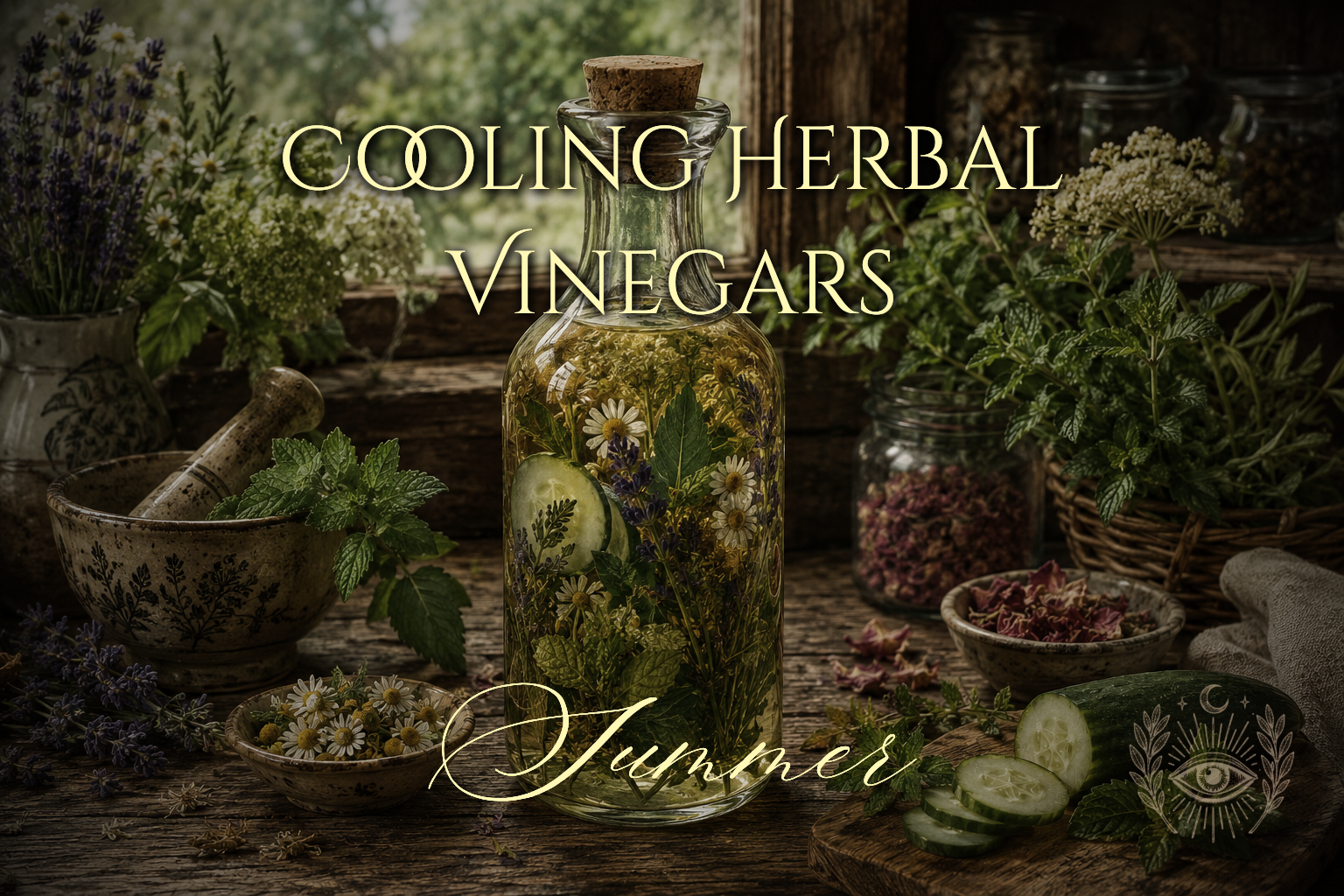
Herbal vinegars occupy a fascinating space between the kitchen and the apothecary. They extract minerals that water often misses, preserve delicate plants that may lose their vitality when dried, and offer a bright acidity that can stimulate digestion during the sluggish heat of summer. When diluted into cool water, added to sparkling water, or incorporated into meals, they become a practical way to work with seasonal plants while supporting the body through the warmest months of the year.
July's herbs lend themselves particularly well to vinegar preparations. Lemon Balm brings brightness. Blue Vervain offers its traditional bitterness. Even Mugwort, used thoughtfully, contributes depth and complexity. The following preparations explore different ways these plants have traditionally found their place in the summer apothecary.
Mineral-rich infusions, bitter preparations, cooling shrubs, and seasonal vinegars built for the kitchen as much as the apothecary.
- Nettle
- Oatstraw
- Red Clover
- Apple Cider Vinegar
- Blue Vervain
- Orange Peel
- Lemon Peel
- Apple Cider Vinegar
- Lemon Balm
- Spearmint
- Sliced Cucumber
- Apple Cider Vinegar
- Honey to Taste
- Mugwort
- Rosemary
- Lemon Peel
- Apple Cider Vinegar
- Rose Petals
- Hibiscus
- Lemon Balm
- Apple Cider Vinegar
Herbal vinegar does not need to remain confined to a tonic glass. Use these preparations in dressings, marinades, cooked greens, sparkling water, shrubs, sauces, or wherever their particular balance of acidity and herbs makes sense.
Garden Mineral Vinegar
Nettle, Oatstraw, and Red Clover make this the most nourishment-oriented preparation of the group. Packed into a jar and covered completely with apple cider vinegar, the herbs can be left to infuse for four to six weeks before straining.
This is not really a vinegar I would judge by whether I wanted to sip it straight from a glass. Its usefulness is at the table. Add a splash to dressings, soups, beans, cooked greens, or anything else that benefits from acidity. It becomes an easy way to work mineral-rich herbs into food rather than treating them as something that must always be consumed separately as “medicine.”
Blue Vervain Digestive Bitter
Blue Vervain's bitterness makes much more sense here than it would in a preparation designed to hide it.
Orange and Lemon peel give the vinegar enough aromatic brightness to keep the formula from becoming flat while allowing the bitter quality of the herb to remain intact. Used in small amounts around meals or diluted into sparkling water, it brings a flavor modern diets do not make much room for anymore.
Not every useful preparation needs to be made sweeter until we can no longer taste what the plant was doing there in the first place.
Cucumber, Mint & Lemon Balm Shrub
This is the one built for a glass.
Cucumber and Spearmint give the preparation its unmistakably cooling character, while Lemon Balm adds brightness without turning the whole thing sharply minty. After several weeks of infusion, strain the vinegar and sweeten it lightly with honey according to taste.
Diluted well into cold or sparkling water, it lands somewhere between herbal preparation and summer drink—which is exactly where a shrub ought to live.
Mugwort Traveler's Vinegar
Mugwort changes the character of the collection.
Paired with Rosemary and Lemon peel, it produces an earthy, aromatic vinegar with enough culinary usefulness to belong in the kitchen, but the older associations of Mugwort also leave room for a different kind of use. Roads, travel, boundaries, crossroads, and other liminal places have followed the plant through a considerable amount of folklore.
That makes this an easy preparation to fold into travel meals, seasonal ritual food, or household work concerned with thresholds without requiring it to stop being food in order to become magical.
Rose & Hibiscus Summer Vinegar
This one gets to be beautiful.
Rose and Hibiscus give the vinegar both color and tart floral character, while Lemon Balm keeps the formula fresh rather than heavily perfumed. It works in sparkling water, fruit, salad dressings, syrups and sauces, and summer desserts where acidity is useful rather than intrusive.
There is no particular virtue in making every herbal preparation austere. Sometimes a jar earns its place in the apothecary because people actually want to use it
Herbal vinegar is useful partly because it refuses to stay in one category. A bottle can end up beside the tinctures one day and beside the olive oil the next. It can preserve a flush of garden herbs, sharpen a dressing, become a cold drink, or make an ordinary meal a little more interesting.
Follow the herbs beyond the vinegar jar into their traditional uses, preparations, folklore, correspondences, cultivation, and safety.