Nervine balm, bee herb, heart-soothing garden medicineLemon Balm is a fragrant perennial in the mint family, beloved for its soft lemon scent, calming nature, and long history as a household remedy. Traditionally used throughout European herbalism for melancholy, nervous tension, sleep, digestion, and the heart, it remains one of the most approachable nervine herbs for modern home herbalists. Its leaves are commonly prepared as tea, tincture, glycerite, syrup, or fresh garden medicine. Magically, Lemon Balm belongs to the work of sweetness, peace, emotional repair, gentle prosperity, and calling the spirit back into the body.
Quick Correspondence Block
Planet: Moon / Venus
Element: Water with Air
Zodiac: Cancer, Taurus, Libra
Primary Actions: Nervine, carminative, mild sedative, antiviral, antispasmodic, uplifting aromatic
Parts Used: Leaf, flowering tops
Preparation Style: Fresh infusion, tincture, glycerite, syrup, infused honey, bath, wash
Magical Uses: Peace, sleep, emotional healing, love, sweetness, household harmony, bee magic, gentle prosperity
Spirit of the Herb: The soft hand on the shoulder after the storm.
Overview
Lemon Balm is one of those herbs that looks humble until you sit with it long enough to realize it has been quietly holding entire households together for centuries. It grows in generous green clumps, releases a bright lemon scent when touched, and brings the kind of medicine that does not shout to be useful. This is not a dramatic herb. This is the cup of tea after crying. The garden leaf crushed between the fingers when the nerves are frayed. The plant that reminds the body it is allowed to unclench.
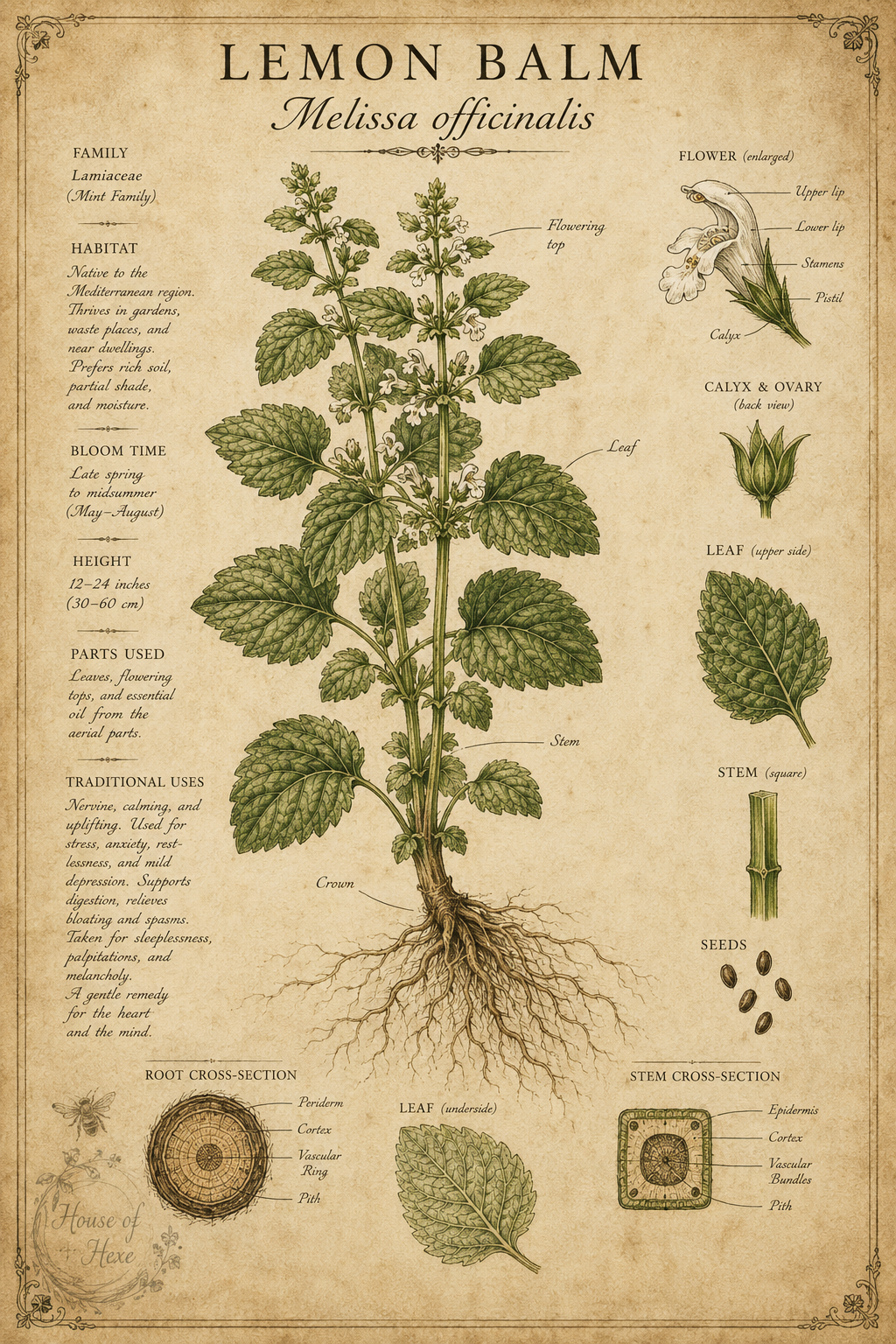
Botanically, Lemon Balm is Melissa officinalis, a member of the Lamiaceae, or mint family. The name Melissa comes from the Greek word for “bee,” and the plant has long been associated with bees, sweetness, temples, gardens, and the preservation of joy. Missouri Botanical Garden describes it as a bushy herbaceous perennial with lemon-scented leaves, square stems, and small white flowers that attract bees. (Missouri Botanical Garden)
In modern herbalism, Lemon Balm is especially valued as a nervine, a digestive aromatic, and a gentle sleep-supporting herb. The European Medicines Agency recognizes traditional use of Lemon Balm leaf for relief of mild symptoms of mental stress, to aid sleep, and for mild gastrointestinal complaints such as bloating and flatulence. (European Medicines Agency (EMA))
Botanical Identification
Lemon Balm grows as a bushy perennial herb with soft, bright green leaves and the classic square stems of the mint family. It usually reaches about 1.5 to 2 feet tall, though happy plants can spread outward into full, leafy mounds. (Missouri Botanical Garden)
The leaves are opposite, oval to heart-shaped, lightly toothed along the edges, and somewhat wrinkled or quilted in texture. When crushed, they release a distinct lemony aroma that is fresher and softer than true lemon peel, with a green, honeyed undertone.
The flowers are small, pale, and often white to light yellowish or pinkish. They appear in summer along the leaf axils and are especially loved by bees. The plant prefers garden edges, herb beds, cottage gardens, borders, and disturbed soil where it can establish easily.
Lemon Balm may be confused by beginners with other mints, catnip, bee balm, or young nettle at a glance. The scent is the easiest identifying marker. If it does not smell distinctly lemony when crushed, slow down and confirm the plant before harvesting.
Traditional Uses
Historically, Lemon Balm was a beloved household and monastery herb. It appears across European herbal traditions as a plant for the heart, nerves, digestion, melancholy, and longevity. It was often used in teas, cordials, waters, and elixirs, including old preparations meant to “comfort the heart” and gladden the spirit.
In domestic medicine, Lemon Balm was used for nervous stomach, low mood, sleeplessness, restlessness, and tension held in the body. Its aromatic leaves made it useful not only as medicine, but also as a culinary herb, strewing herb, and fragrant addition to household preparations.
It was also closely tied to bees. The name Melissa itself means bee, and Lemon Balm was traditionally planted near hives or rubbed on empty hives to encourage bees to settle. This gives the herb a strong magical link to sweetness, community, fertility, devotion, and the golden hum of a well-tended home.
Modern Herbal Actions
Lemon Balm is best known as a nervine, meaning it supports the nervous system. In practical terms, this means it is often used when stress shows up as restlessness, irritability, tension, anxious digestion, or trouble settling into sleep.
It is also a carminative, which means it helps ease gas, bloating, and digestive discomfort. Aromatic herbs like Lemon Balm contain volatile oils that can relax tension in the digestive tract and help move trapped wind. This is why Lemon Balm is so often used when the stomach and nerves are tangled together.
Lemon Balm is considered a mild sedative in the herbal sense, though not heavy or dulling for most people. It is more of a softener than a hammer. It helps take the edge off.
It also has a traditional and modern reputation for antiviral activity, especially in topical preparations for cold sores, though the strength of evidence varies by preparation and study. For a home herbalist, this makes Lemon Balm especially interesting as both internal nervous system support and an external herb for certain viral skin concerns.
Preparations
Lemon Balm shines brightest when used fresh. Drying is useful, but the volatile oils are delicate, and the flavor fades faster than many sturdier herbs.
Tea / Infusion:
Fresh Lemon Balm infusion is one of the best preparations. Use fresh leaves when possible, steep covered, and drink for stress, digestion, emotional upset, or evening unwinding.
Tincture:
Fresh plant tincture captures more of Lemon Balm’s aromatic brightness than dried tincture. This is useful for people who want a quick, shelf-stable nervous system ally.
Glycerite:
A beautiful option for children, alcohol-sensitive people, or anyone who wants a sweet, gentle preparation. Lemon Balm glycerite is especially suited for emotional tension and bedtime blends.
Syrup:
Useful for nervous stomach, seasonal blends, and soothing formulas. It combines well with chamomile, lavender, rose, elderflower, or ginger depending on the desired direction.
Infused Honey:
Fresh Lemon Balm in honey is simple, delicious, and deeply aligned with the plant’s bee medicine. Use it in tea, ritual foods, or sweetening preparations.
Bath / Wash:
Lemon Balm makes a lovely ritual bath or floor wash for peace, emotional clearing, and softening tension in the home.
Oil / Salve:
Less common than tea or tincture, but Lemon Balm-infused oil may be used in topical formulas, especially when working with its soothing and skin-comforting qualities.
Magical Uses
Lemon Balm is a balm in the old sense: something that soothes, seals, and brings comfort back into places that have been rubbed raw.
Magically, this is an herb for peace after conflict, sweetness after bitterness, and rest after overstimulation. It does not force joy. It invites the spirit to remember that joy is still possible.
Use Lemon Balm in workings for household harmony, restful sleep, emotional healing, gentle love, reconciliation, and nervous system recovery after difficult spiritual work. It is especially useful when a space feels sharp, tense, or emotionally overhandled.
In folk magic, Lemon Balm belongs beautifully in honey jars, peace baths, dream pillows, blessing washes, and heart-healing spells. It may be added to workings for friendship, attraction, and gentle prosperity, especially when the goal is not domination but sweetness, connection, and restored flow.
This is also a strong herb for bee magic. Work with Lemon Balm when calling in community, devotion, pollination of ideas, creative fertility, or the steady hum of a home that feeds more than just the body.
Astrological Correspondences
Lemon Balm carries a blended nature of Moon and Venus.
The Moon appears in its cooling, soothing, moistening, emotionally restorative qualities. Lemon Balm is a plant for the nervous system, the stomach, sleep, memory, grief, and the tender places where the body keeps score.
Venus appears in its sweetness, fragrance, beauty, and ability to soften tension. Venus does not only rule romance. Venus rules cohesion, pleasure, repair, and the forces that help life become livable again.
Elementally, Lemon Balm is primarily Water, with a noticeable thread of Air. The Water is in its emotional medicine, calming nature, and affinity for the heart and stomach. The Air is in its lemony aroma, lightness, and ability to lift the mood without dragging the body into heaviness.
Zodiacally, Lemon Balm fits well with Cancer for emotional soothing and home medicine, Taurus for embodied comfort and sweetness, and Libra for peace, harmony, and relational repair.
Lemon Balm is especially suited to waxing Moon work for sweetness and restoration, full Moon baths for emotional release, and Venus days when the work involves peace, love, beauty, or gentle prosperity.
Growing & Harvesting
Lemon Balm is easy to grow and generous once established. It prefers well-drained soil, regular moisture, and full sun to partial shade. In hotter climates, afternoon shade helps keep the leaves tender and aromatic. It is hardy in many temperate regions and can spread readily in the garden.
Missouri Botanical Garden lists Lemon Balm as a perennial commonly grown in herb gardens and border fronts, typically reaching around 2 feet tall, with lemon-scented leaves and summer flowers. (Missouri Botanical Garden)
Harvest the leaves before flowering for the strongest flavor and aromatic quality. Once the plant flowers, the leaves may become less vibrant in scent, though still usable. Cut stems in the morning after dew has dried, then bundle loosely or dry on screens away from direct sunlight.
Because Lemon Balm loses scent with age, store dried leaves in airtight jars away from heat and light, and use within a year for best quality. For stronger medicine and flavor, tincture or glycerite the fresh plant when possible.
Warnings & Contraindications
Lemon Balm is generally considered a gentle herb when used appropriately, especially as tea or food-like preparation. However, concentrated extracts, capsules, and tinctures deserve more care.
Use caution with sedative medications, alcohol, or other calming herbs, as Lemon Balm may increase drowsiness in some people. People with thyroid conditions, especially those taking thyroid medication or managing hyperthyroid conditions, should speak with a qualified healthcare provider before using Lemon Balm medicinally in concentrated or frequent doses. Some clinical safety sources also advise extra caution during pregnancy, breastfeeding, and with children due to limited data for supplemental dosing. (Verywell Health)
Topically, Lemon Balm may irritate sensitive skin in some individuals. Patch test preparations before wider use.
As always, this Materia Medica is educational and not a substitute for medical care, diagnosis, or treatment.
Final Thoughts
Lemon Balm is the herb of the softened room, the unclenched jaw, the garden chair after the hard conversation. It is not weak medicine because it is gentle. It is the kind of plant that understands how much repair can happen when the body finally feels safe enough to exhale.
Sources / Further ReadinG
European Medicines Agency. “Community Herbal Monograph on Melissa officinalis L., folium.” 2013. (European Medicines Agency (EMA))
European Medicines Agency. “Assessment Report on Melissa officinalis L., folium.” 2013. (European Medicines Agency (EMA))
Missouri Botanical Garden. “Melissa officinalis Plant Finder.” (Missouri Botanical Garden)
American Botanical Council. “Lemon Balm: Expanded Commission E Monograph.” (HerbalGram)
Herb Society of America. “Lemon Balm Guide.” (herbsociety.org)