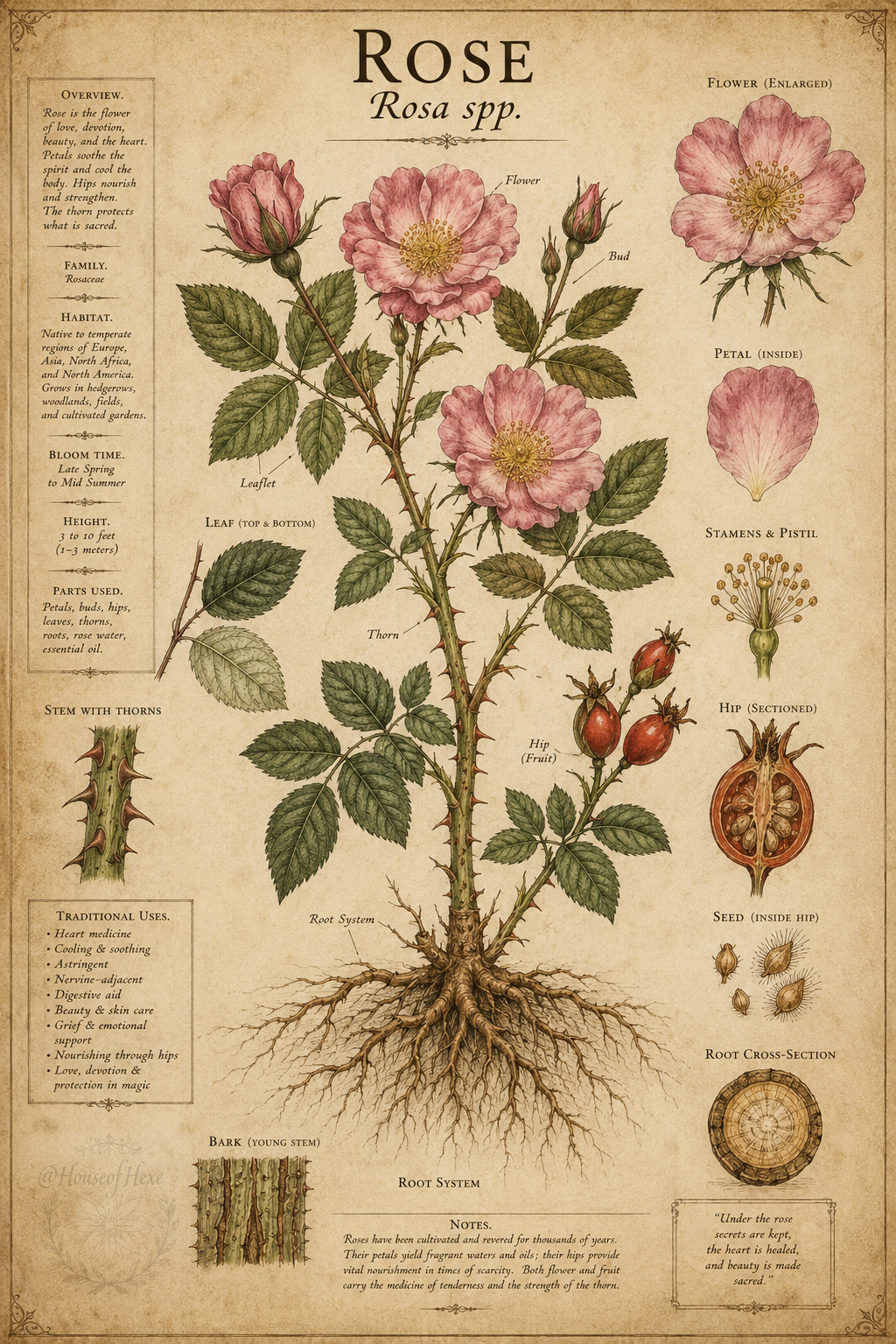
Rose | Rosa spp.
Thorned heart medicine, flower of devotion, grief-softener, beauty herb, boundary keeper, and old ally of love, mourning, protection, and remembranceRose is one of the most culturally saturated plants in the world, and that is exactly why it deserves to be handled carefully. Familiarity has made it sentimental, but Rose is not merely soft. She is petal and thorn, sweetness and defense, open bloom and blood-drawing boundary. In herbalism, folk practice, perfumery, food, devotion, mourning, and magic, Rose has long stood at the meeting place between the body and the heart.
Quick Correspondence Block
Planet: Venus, Moon
Element: Water, Earth
Zodiac: Taurus, Libra, Cancer
Primary Actions: Aromatic, astringent, cooling, nervine-adjacent, heart-supportive folk use, antioxidant, nutritive through hips
Parts Used: Petals, buds, hips, leaves, thorns, rose water, essential oil
Preparation Style: Tea, infusion, honey, syrup, vinegar, glycerite, rose water, oil, bath, compress, powder, food, incense, ritual wash
Magical Uses: Love, devotion, grief, beauty, protection, blessing, reconciliation, ancestral remembrance, heart healing, glamour, offerings
Spirit of the Herb: The thorned heart: soft enough to open, strong enough to guard what is sacred.
Overview
Rose is often mistaken for a simple love herb because modern culture has flattened it into romance. Yet the older Rose is far more complex. It belongs to courtship and marriage, yes, but also to graves, saints, wounds, queenship, secrecy, perfume, medicine, mourning, and protection. Its beauty is not fragile. It is defended.
Botanically, Rose refers to many species in the genus Rosa, including wild roses, old garden roses, apothecary roses, damask roses, dog roses, and rugosa roses. Traditional herbal and culinary use often centers on fragrant petals and rose hips, the fruiting bodies that develop after the flower fades. Rose hips from species such as Rosa canina and Rosa rugosa are valued for their tart flavor and nutrient density, especially their vitamin C and antioxidant content. (PFAF)
In the apothecary, Rose has been used for cooling, soothing, tightening, softening, and restoring. The petals bring fragrance, astringency, and emotional ease. The hips bring nourishment, tartness, and winter medicine. Rose water belongs to the face, the altar, the sickroom, the feast table, and the mourner’s hands.
Botanical Identification
Rosa species are perennial shrubs in the Rosaceae family. They may be climbing, arching, sprawling, or compact, depending on species and cultivar. Most roses bear prickles along the stems, though these are commonly called thorns in folk language.
Growth Habit
Roses may grow as wild hedgerow shrubs, cultivated garden bushes, climbing canes, or dense thickets. Wild roses often have a looser, more open habit than modern ornamental hybrids.
Leaves
Rose leaves are usually pinnate, meaning they are divided into smaller leaflets arranged along a central stem. The leaflets are often serrated and may be matte, glossy, soft, or leathery depending on the species.
Flowers
Wild roses commonly have five petals, while cultivated roses may have many layered petals. Fragrance varies greatly. For herbal and magical work, strongly scented, unsprayed roses are generally preferred.
Stems / Thorns
The stem may be smooth or heavily armed with prickles. In magical language, this is important. The flower opens; the thorn refuses careless handling.
Hips
After pollination, the rose forms hips: red, orange, or sometimes darker fruits that contain seeds and fine irritating hairs. These hips are used in teas, syrups, jams, vinegars, powders, and winter formulas.
Habitat
Roses grow across many temperate regions and have been cultivated for thousands of years. They prefer sun, air circulation, and well-drained soil, though species roses can be remarkably resilient.
Lookalikes / Confusion Species
Roses are usually easy to recognize, but identification should still be careful when harvesting wild plants. Avoid harvesting from roadsides, sprayed landscaping, florists, or ornamental shrubs treated with systemic pesticides.
Traditional Uses
Rose has lived in the overlap between medicine, food, beauty, and rite. It was never only decoration.
Heart and Grief HerbRose petals have long been used where the emotional body feels bruised, hot, tender, or closed. This is not because Rose erases grief, but because it gives grief a vessel. A cup of rose tea, a rose bath, or rose honey does not deny sorrow. It softens the edges enough that sorrow can move.
Cooling and Soothing HerbIn traditional systems, Rose is often treated as cooling. Rose petals, rose water, and rose preserves have been used for heat, irritation, inflammation, emotional agitation, and overheated states. A review of Rosa damascena notes traditional uses for abdominal and chest discomfort, mood, digestive complaints, and other conditions in Iranian traditional medicine. (PMC)
Astringent HerbRose petals contain tannins, giving them a gentle astringent quality. This makes them useful in washes, gargles, skin preparations, and formulas where tissue tone is desired.
Beauty and Skin HerbRose water has been used in skin care, bathing, perfumery, and ritual purification for centuries. It carries both fragrance and mild astringency, making it especially beloved in facial washes, creams, compresses, and ceremonial rinses.
Food and ConfectionRose appears in syrups, preserves, jams, cordials, desserts, teas, and waters. Gulkand, a rose petal preserve made with sugar or honey, is one traditional preparation associated with cooling and digestive use. (PMC)
Winter Nourishment Through HipsRose hips are tart, bright, and traditionally gathered after the flowers have faded. They are used in teas, syrups, jams, and immune-season formulas, especially because of their vitamin C and polyphenol content. (PMC)
Modern Herbal Actions
Rose is gentle, but gentle does not mean empty. Its actions depend strongly on the part used.
Aromatic - Rose petals and rose water carry volatile aromatic compounds that affect the senses quickly. The scent alone can shift the atmosphere of a room or the emotional tone of a preparation.
Astringent - Petals and leaves offer mild astringency due to tannins. This makes Rose useful in skin washes, mouth rinses, gargles, and preparations for lax or irritated tissues.
Cooling - Rose is often used where there is heat: emotional heat, skin heat, inflammatory heat, or the heat that follows grief, anger, embarrassment, or tenderness.
Nervine-Adjacent - Rose is not a heavy sedative nervine, but it is often used in formulas for emotional distress, heartbreak, grief, anxiety held in the chest, and nervous tension. Its effect is subtle, sensory, and relational.
Antioxidant - Both petals and hips contain antioxidant compounds. Rose hips in particular have been studied for their phenolics, carotenoids, vitamin C, and other bioactive constituents. (PMC)
Nutritive Through Hips - Rose hips are food-like medicine. They belong to the winter pantry as much as the apothecary shelf, offering tartness, minerals, vitamins, and a bright red reminder that the flower’s virtue does not end when the petals fall.
Preparations
Rose changes dramatically depending on preparation. Fresh petals, dried petals, rose water, rose hip syrup, and essential oil are not interchangeable.
Tea
Rose petal tea is gentle, fragrant, and heart-softening. It may be used alone or blended with hawthorn, lemon balm, chamomile, tulsi, hibiscus, or mint.
Infusion
A stronger infusion may be used for baths, compresses, facial rinses, grief rites, altar washing, and love or beauty workings.
Rose Honey
Fresh or dried petals may be infused into honey for emotional comfort, throat formulas, devotional offerings, and culinary use.
Rose Vinegar
Rose vinegar is excellent for skin, hair rinses, food preparations, and ritual washes. It carries both the sour preserving virtue of vinegar and the floral virtue of Rose.
Rose Water
Rose water is one of the great preparations of the old apothecary. It may be used for skin, ritual cleansing, altar work, blessing, cooling, and beauty rites.
Rose Hip Tea
Rose hips make a tart, nourishing tea. They are often simmered or steeped longer than delicate petals. Strain carefully if the hips have been crushed, because the inner hairs can irritate the throat.
Rose Hip Syrup
A classic preparation for winter, especially when made from clean, unsprayed hips. It may be taken by the spoon, added to tea, or used in food.
Oil Infusion
Rose-infused oil may be used for anointing, massage, body care, grief work, glamour magic, and devotional rites. It is not the same as rose essential oil.
Essential Oil / Absolute
Rose essential oil and rose absolute are intensely concentrated, expensive, and powerful. They should be diluted and used respectfully. A little is enough.
Ritual Bath
Rose petals, rose water, milk, honey, basil, lavender, or calendula may be added to baths for beauty, grief, devotion, softness, reconciliation, or self-restoration.
Magical Uses
Rose is one of the great magical plants because it contains paradox without needing explanation. It attracts and protects. It opens and guards. It softens and draws blood. Few plants embody the mysteries of the human heart as completely as Rose.
In workings of Love, Rose moves far beyond simple romance. It belongs to affection, tenderness, friendship, sensuality, devotion, marriage, and the restoration of sweetness where bitterness or neglect has begun to settle. It may be carried in charm bags, steeped into ritual baths, added to honey jars, or offered in rites where genuine emotional connection is being cultivated.
In acts of Devotion, Rose appears across religious, mystical, and magical traditions as an offering of reverence. It is given to saints, goddesses, beloved ancestors, spirits of mercy, and powers associated with beauty, healing, and compassion. A rose placed upon an altar is not merely decorative, it is a living gesture of respect, tenderness, and sacred attention.
In Grief and Mourning, Rose belongs at the grave as naturally as it belongs in the bridal chamber. It helps the heart hold memory without allowing memory to sour into despair. Rose may be placed in mourning baths, ancestor bowls, memorial candles, funeral offerings, letters to the dead, or quiet rites of remembrance where love still lingers after loss.
In workings of Beauty and Glamour, Rose is among the finest allies when approached with discipline. It does not create false beauty. It reveals what is already present, softens harshness, polishes confidence, and strengthens magnetism. Rose glamour is not about begging to be desired. It is about remembering one’s own fragrance.
In Protection, the thorn becomes just as important as the flower. Rose thorns may be placed in protective bottles, boundary charms, warding work, and defensive rites meant to guard the home, the heart, or the beloved. Rose reminds us that tenderness without boundaries eventually becomes self-sacrifice.
In Reconciliation, Rose may be worked where affection has grown strained but not broken. Paired with honey, lavender, violet, balm, or apple, it may help soften pride, calm resentment, and reopen honest pathways between people. Rose does not force affection. It simply makes tenderness possible again.
In matters of Secrecy, Rose carries the old phrase sub rosa “under the rose.” For centuries it has symbolized confidentiality, sacred trust, and things spoken only behind closed doors. In magical work, Rose may be placed over journals, confessions, private workings, love letters, and rites meant to remain hidden from outside eyes.
For Ancestral Remembrance, Rose is especially appropriate when the work touches maternal lines, beloved dead, family sorrow, marriage, beauty, grief, or inherited emotional wounds. A single rose placed upon an ancestor altar can carry both love and memory across generations.
Astrological Correspondences
Under Planetary Rulership, Rose belongs first and foremost to Venus. Here we find beauty, attraction, sensuality, affection, fertility, art, reconciliation, pleasure, and the embodied experience of love. Yet Rose teaches a deeper Venus than modern softness often allows. Beauty has teeth. Attraction requires discernment. Desire without respect eventually becomes consumption. Rose reminds us that true Venus is not passive…it is selective, magnetic, and fiercely self-aware.
Its Secondary Rulership falls under the Moon, whose influence reveals itself through memory, grief, tenderness, motherhood, emotional tides, intuition, and the waters of the inner life. Rose water in particular carries strong lunar virtue, often used in cleansing, blessing, dream work, and rites involving emotional healing.
Its Elemental Nature is both Water and Earth. Water governs emotion, love, grief, devotion, cooling, and memory. Earth governs the body, the garden, the thorn, the fruit, the boundary, and the physical vessel through which beauty takes form. Rose teaches that feeling must be rooted if it is to endure.
Among the Zodiac Ties, Rose resonates strongly with Taurus, where sensuality, fragrance, beauty, food, pleasure, and embodiment live. It also aligns with Libra, governing harmony, attraction, relationship, diplomacy, and aesthetic balance. Through Cancer, Rose speaks to memory, mourning, family devotion, protection, and the tender chambers of the emotional body.
In Seasonal Timing, Rose belongs first to late spring and summer when the blooms open fully, filling gardens with fragrance and color. Yet its medicine does not end there. As autumn and winter arrive, the hips remain, offering nourishment long after the petals have fallen. Magically, rose petals are often worked during Venus days and hours, during the waxing moon for attraction, beauty, and affection, during the full moon for devotion and blessing, and during the waning moon for grief release, forgiveness, and emotional cleansing. Rose hips, by contrast, belong beautifully to the darker half of the year, when nourishment becomes as sacred as beauty.
Growing & Harvesting
Rose is not difficult, but she is particular. She wants sun, air, pruning, and respect.
Soil
Roses prefer fertile, well-drained soil with steady moisture. Heavy clay may need amendment. Very poor soil may produce a tougher plant but fewer lush blooms.
Sun
Most roses prefer full sun, though some old or wild varieties tolerate partial shade.
Water
Water deeply rather than constantly misting the leaves. Wet foliage and poor air circulation can encourage disease.
Harvesting Petals
Harvest petals from unsprayed roses when they are fresh, fragrant, and fully open but not yet browning. Morning after dew dries is often ideal.
Drying Petals
Dry petals quickly and gently away from direct sun. Properly dried rose petals should retain color and fragrance. If they smell dusty, they have lost much of their virtue.
Harvesting Hips
Allow hips to ripen fully to red or orange. Many people harvest after the first light frost, when the flavor sweetens. Use only hips from unsprayed plants.
Preparing Hips
Large hips may be split and cleaned of seeds and irritating hairs before use. Small hips may be dried whole, but crushed hips should be strained carefully.
Storage
Store petals and hips in airtight jars away from heat, moisture, and direct light.
Warnings & Contraindications
Use only roses that are unsprayed and safe for consumption. Florist roses are usually not appropriate for herbal use.
Rose hips contain irritating hairs around the seeds. Strain teas well, especially when using cut or powdered hips.
Rose hips are naturally acidic and may aggravate reflux or sensitive digestion in some people.
Those on blood-thinning medications, with kidney stone history, iron overload concerns, or complex medical conditions should use caution with high-dose rose hip supplements because of their vitamin C content and concentrated constituents.
Rose essential oil and absolute should be diluted before topical use. Essential oils are not the same as petals, tea, or rose water.
Allergic reactions are possible, especially for those sensitive to plants in the Rosaceae family.
Final Thoughts
Rose is not merely the flower of love. She is the flower of the heart’s full education.
She teaches attraction, but also refusal. She teaches softness, but not collapse. She teaches grief, but not despair. She teaches beauty, but never without boundary.
In the old herbal library, Rose belongs in the drawer marked Heart, Thorn, Devotion, Mourning, Beauty, and Sacred Defense.
SOURCES / FURTHER READING
Boskabady, M. H., et al. “Pharmacological Effects of Rosa damascena.”
Mahboubi, M. “Rosa damascena as Holy Ancient Herb with Novel Applications.”
Mármol, I., et al. “Therapeutic Applications of Rose Hips from Different Rosa Species.”
Winther, K., et al. “Bioactive Ingredients of Rose Hips (Rosa canina L.).”
American Botanical Council. “Rose Hip.”
Plants for a Future. “Rosa canina.”
Grieve, Maud. A Modern Herbal.
Hoffmann, David. Medical Herbalism.