Tulsi | Ocimum tenuiflorum
Herb of devotion, resilience, breath, sacred protection, nervous system steadiness, household blessing, spiritual clarity, and the living altarTulsi is not merely an herb one takes. Tulsi is an herb one keeps company with. Known widely as Holy Basil, Ocimum tenuiflorum is one of the most revered plants in Ayurveda and Hindu household tradition, where it has long stood at the threshold between medicine, prayer, domestic protection, and daily devotion.
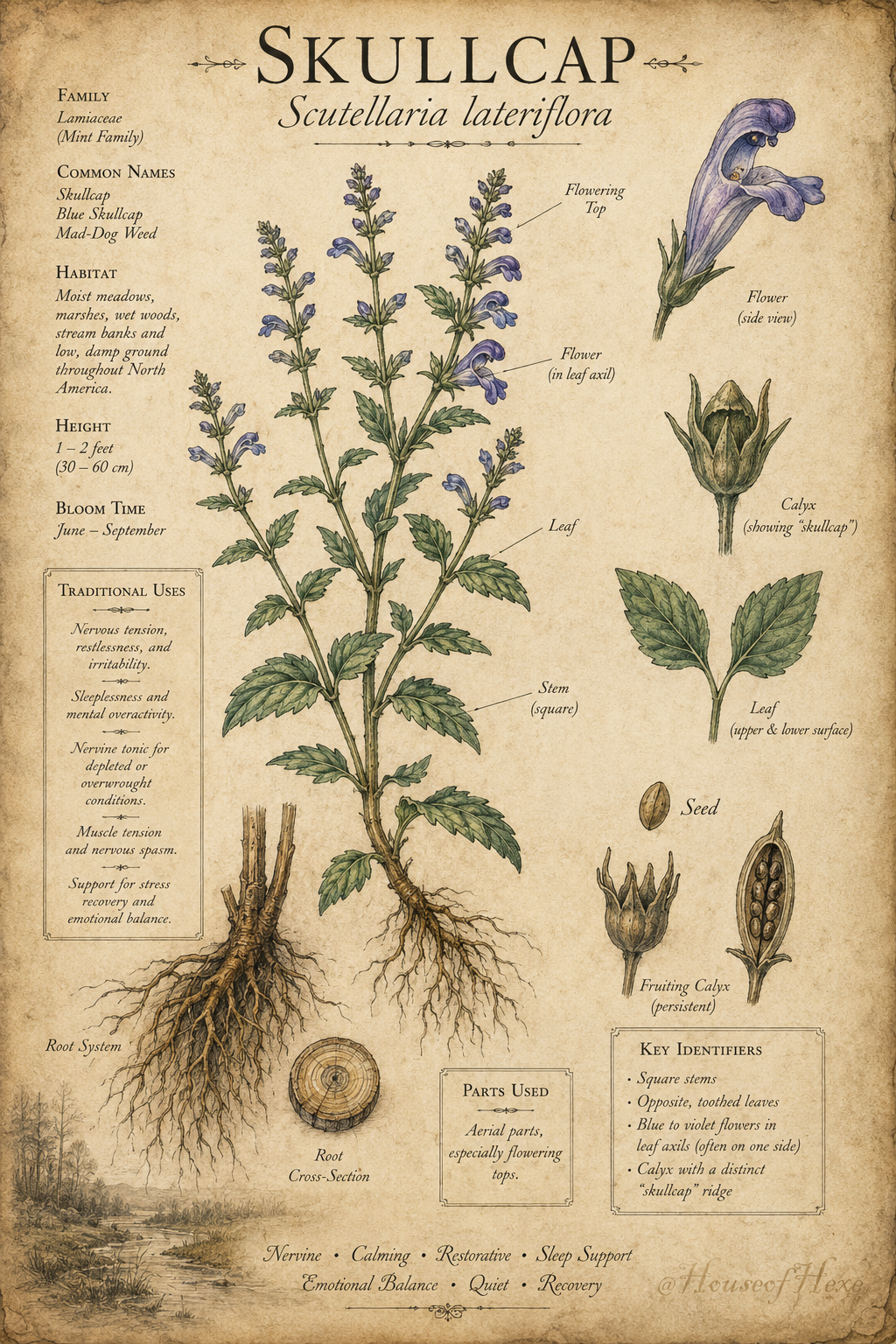
Quick Correspondence Block
Planet: Sun, Jupiter, Venus, Mercury
Element: Fire, Air
Zodiac: Leo, Sagittarius, Virgo, Gemini
Primary Actions: Adaptogen, nervine, carminative, diaphoretic, antimicrobial-adjacent, antioxidant, respiratory-supportive, digestive-supportive, stress-response supportive
Parts Used: Leaves, flowering tops, aerial parts, seeds in some traditions
Preparation Style: Tea, infusion, tincture, glycerite, honey, vinegar, syrup, steam, bath, ritual wash, incense, altar plant
Magical Uses: Devotion, protection, blessing, purification, prosperity, spiritual discipline, household peace, prayer work, ancestral reverence, clearing stagnant thought
Spirit of the Herb: The keeper of the living altar: fragrant, watchful, bright-hearted, and rooted in the old conversation between medicine and prayer.
Overview
Tulsi is one of those plants that refuses to remain in a single category. It is medicinal, culinary, devotional, protective, aromatic, domestic, and deeply symbolic. In Ayurveda, it is often treated as a sacred plant, not only because of what it does in the body, but because of what it represents in the household: purity, resilience, protection, and right relationship.
Botanically, Tulsi is Ocimum tenuiflorum, also known by the synonym Ocimum sanctum. It belongs to the mint family, Lamiaceae, and is closely related to culinary basil, though its temperament is sharper, warmer, more medicinal, and more spiritually charged. Kew’s Plants of the World Online lists Ocimum tenuiflorum as an accepted species native from tropical and subtropical Asia to the western Pacific. (Plants of the World Online)
In modern herbalism, Tulsi is most often discussed as an adaptogen and nervine, especially for stress, mental fog, low resilience, respiratory congestion, and digestive stagnation. Clinical research on Tulsi is still developing, but a systematic review of human studies reported favorable outcomes across several areas with no significant adverse events in the reviewed studies, while still calling for stronger research. (PMC)
Tulsi matters because it shows us something many modern systems have forgotten: an herb can be medicine without being stripped of its spirit. It can belong to the cup, the garden, the altar, the kitchen, and the nervous system all at once.
Botanical Identification
Ocimum tenuiflorum is a fragrant, branching member of the mint family. Like many mints, it has square stems, opposite leaves, and aromatic oils held within the plant tissue. Depending on variety, climate, and growing conditions, Tulsi may behave as a tender perennial, short-lived perennial, or annual in colder regions.
Growth Habit
Tulsi grows as an upright, branching herb or small subshrub. It may reach one to three feet tall, though cultivated plants can vary widely. It becomes bushier when pinched back regularly and will often flower abundantly if allowed to mature.
Leaves
The leaves are opposite, slightly toothed, and strongly aromatic when crushed. They may be green, purple-tinged, or darker purple depending on the variety. Rama Tulsi is often greener and softer in flavor, Krishna Tulsi is darker and more pungent, and Vana Tulsi is often treated as a wild or forest type.
Flowers
Tulsi produces slender flowering spikes with small tubular blossoms, often pale purple, lavender, or pinkish-white. Bees love the flowers. Once Tulsi begins to bloom, it becomes a living hum in the garden.
Stem
The stem is square, a signature of the mint family. In some varieties, especially Krishna Tulsi, stems may carry a purple cast.
Scent
The scent is one of the easiest ways to recognize Tulsi. It is spicy, clove-like, warm, peppery, sweet, and green all at once. This comes partly from volatile compounds such as eugenol and other aromatic constituents.
Habitat
Tulsi prefers warmth, sun, and well-drained soil with steady moisture. It does not like cold soil, frost, or neglect during establishment. In cooler climates, it is usually grown as an annual or container plant.
Traditional Uses
Tulsi has a long history in Ayurveda, household ritual, and devotional practice. It is associated with purification, resilience, respiratory support, spiritual merit, and the maintenance of health through daily use. A major review describes Tulsi as a plant used traditionally for many purposes, including support during stress, infection, and metabolic imbalance. (PMC)
Devotional Use - In Hindu tradition, Tulsi is deeply sacred and often associated with Vishnu and Lakshmi. A Tulsi plant may be kept near the home or courtyard, watered daily, circled in prayer, and treated as a living presence rather than a mere botanical specimen. This is important to understand. Tulsi’s history is not only pharmacological. It is devotional.
Stress and Resilience - Tulsi is traditionally used where the person feels depleted, burdened, clouded, or worn down by prolonged strain. It is not usually thought of as a heavy sedative. Its action is brighter than that. Tulsi helps the system stand upright again.
Respiratory Support - Tulsi has long been used in traditional systems for coughs, colds, congestion, and damp heaviness in the chest. It brings warmth and movement, making it especially suited to respiratory states that feel stagnant, chilled, or heavy.
Digestive Support - As an aromatic mint-family plant, Tulsi supports digestion through warmth, movement, and carminative action. It may be used when stress has entered the stomach, when appetite is dull, or when digestion feels cold and sluggish.
Daily Tonic Use - Tulsi is often taken as a daily tea. This is one of its great virtues. It is not only an herb for crisis. It is an herb for rhythm.
Modern Herbal Actions
Tulsi’s modern herbal reputation centers on stress response, inflammation, metabolic support, immune resilience, and nervous system clarity. Research remains incomplete, but the body of study around Tulsi has grown significantly in recent years.
Adaptogen - Tulsi is commonly described as an adaptogen: an herb used to support the body’s response to stress. This does not mean it erases stress or makes the practitioner invincible. It means Tulsi may help the body respond with more steadiness when life keeps asking too much.
Nervine - Tulsi has a clearing, uplifting nervine quality. It is especially useful when stress creates fog, heaviness, irritability, or a sense of being spiritually and mentally cluttered.
Antioxidant and Anti-inflammatory Support - Modern reviews have examined Tulsi’s antioxidant and anti-inflammatory potential, with many studies focusing on its phytochemical constituents and broad protective actions. (PMC)
Respiratory Support - Tulsi’s aromatic warmth makes it useful in formulas for seasonal respiratory discomfort, especially when paired with ginger, honey, lemon, thyme, or elecampane depending on the person and pattern.
Digestive and Carminative Action - Tulsi’s volatile oils support digestion, help move gas, and bring warmth to a sluggish gut. It is especially helpful when digestion is tied to stress.
Metabolic Support - Some research has explored Tulsi in relation to blood sugar, cholesterol, and metabolic markers, though this should be treated as supportive research rather than a replacement for medical care. Human evidence exists, but larger and better-controlled studies are still needed. (PMC)
Preparations
Tulsi is generous in preparation. It gives itself readily to water, alcohol, honey, vinegar, steam, smoke, and ritual.
Tea
Tulsi tea is the classic daily preparation. It may be taken in the morning for clarity, in the afternoon for stress support, or in the evening if the person responds well to its warmth. It blends beautifully with rose, lemon balm, ginger, cinnamon, cardamom, lavender, nettle, oatstraw, or peppermint.
Infusion
A stronger infusion may be used when deeper support is desired. Cover the cup while steeping to keep the volatile oils from escaping with the steam.
Tincture
Tulsi tincture is useful when a stronger, more concentrated preparation is needed. Fresh plant tincture captures the living aromatic quality especially well.
Glycerite
Tulsi glycerite is pleasant, sweet, and useful for those avoiding alcohol. It is especially good for devotional daily use or formulas for children when appropriate and properly dosed.
Honey
Tulsi-infused honey is excellent for the throat, tea, ritual offerings, and winter preparations. It carries Tulsi’s warmth in a form that feels both medicinal and devotional.
Steam
Tulsi may be used in herbal steams for respiratory heaviness or energetic clearing. The aromatic vapor opens the senses and helps move stagnation.
Bath or Ritual Wash
Tulsi infusion may be added to baths or washes for purification, spiritual renewal, and household blessing. It is especially appropriate before prayer, study, divination, or beginning a new cycle of work.
Incense or Smoke
Dried Tulsi can be included in incense blends for blessing, protection, devotion, and clearing. It is not as resinous as frankincense or myrrh, but it brings a bright, green, sacred quality to smoke work.
Magical Uses
Tulsi’s magic is devotional before it is decorative. It does not belong to the shallow idea of “good vibes.” It belongs to discipline, prayer, breath, offering, and the daily tending of spiritual relationship.
Devotion
Tulsi is one of the great plants of devotion. It teaches that sacredness is not always dramatic. Sometimes it is the same plant watered every morning, the same prayer spoken at the threshold, the same cup prepared with attention.
Protection
Tulsi protects by sanctifying. It does not only drive away what is harmful; it strengthens the presence of what is holy, ordered, and alive. This makes it useful near thresholds, altars, bedrooms, and workspaces.
Purification
Tulsi may be used in cleansing baths, floor washes, altar sprays, and smoke blends. It clears spiritual dullness, emotional residue, and the stale heaviness that gathers when a house has not been spiritually tended.
Prosperity and Blessing
Because of its associations with Lakshmi, household wellbeing, and sacred abundance, Tulsi may be included in prosperity work that is rooted in gratitude, maintenance, and right relationship rather than greed.
Mental Clarity
Tulsi is excellent in workings for study, prayer, discernment, and clearing mental fog. It sharpens without becoming harsh.
Ancestral and Household Work
Tulsi belongs beautifully to the family altar. It may be offered as tea, water, leaf, smoke, or honey in rites of gratitude, protection, and remembrance.
Spiritual Discipline
Tulsi is not an herb of occasional theatrics. It favors repetition. Keep the plant. Water it. Harvest respectfully. Drink the tea. Return to the practice. That is where its deeper magic begins.
Astrological Correspondences
Primary Rulership: Sun
Tulsi carries a strong solar virtue through vitality, purification, sacred order, warmth, courage, and the restoration of life force. It brightens the spirit without becoming frantic.
Secondary Rulership: Jupiter
Jupiter appears through blessing, devotion, wisdom traditions, sacred law, abundance, and spiritual protection. Tulsi expands the field of the practitioner through faith, study, and right relationship.
Venusian Current
Tulsi also carries Venus through love, household harmony, sweetness, beauty, and devotion. This is not ornamental Venus alone. This is Venus as reverence, offering, and care.
Mercurial Quality
Mercury appears in Tulsi’s action on the mind, breath, nerves, and speech. It is useful when thought becomes cloudy, when the breath feels shallow, or when prayer needs a clear road.
Elemental Nature
Fire and Air. Fire governs warmth, purification, vitality, and sacred transformation. Air governs breath, prayer, scent, thought, and the subtle movement of spirit through the house.
Zodiac Ties
Leo appears through solar vitality and sacred confidence. Sagittarius appears through devotion, philosophy, and spiritual teaching. Virgo appears through daily practice, herbal discipline, and service. Gemini appears through breath, thought, communication, and nervous system movement.
Seasonal Timing
Tulsi belongs to sunrise rites, Sunday workings, Thursday blessings, waxing Moon devotionals, household renewal, study periods, and any time the practitioner needs to return life to the altar of the body.
Growing & Harvesting
Tulsi is easy to love and moderately easy to grow if given warmth. It is not a cold-hearted plant. It wants sun, heat, moisture, and attention.
Soil
Tulsi prefers fertile, well-drained soil. It does not want to sit in waterlogged conditions, but it also does not want to be forgotten in dry, poor soil.
Sun
Full sun is best in many climates, though very hot or high-desert gardens may require afternoon protection. In harsh sun, Tulsi may appreciate a little shelter.
Water
Keep Tulsi evenly watered, especially in containers. Let the soil breathe between waterings, but do not let the plant collapse repeatedly from drought stress.
Pinching Back
Pinch the growing tips regularly to encourage bushier growth. Once Tulsi flowers, the pollinators will adore it, but leaf production may slow.
Harvesting
Harvest leaves and flowering tops in the morning after dew has dried but before the strongest heat. Cut above a leaf node so the plant can branch again.
Drying
Dry Tulsi quickly in a warm, shaded, well-ventilated place. Protect the aromatic oils by keeping it away from direct sun and excessive heat.
Storage
Store dried Tulsi in airtight jars away from light, heat, and moisture. Like many aromatic herbs, it is best used within a year for strongest virtue.
Warnings & Contraindications
Tulsi is widely used and generally well tolerated, but it still deserves respect.
Use caution during pregnancy or when trying to conceive unless guided by a qualified practitioner. Some sources advise caution because safety data is limited and animal studies have raised fertility-related questions.
Use caution with blood-thinning medications or before surgery, as Tulsi may have mild blood-thinning or clotting-related effects.
Use caution with diabetes medications or blood sugar-lowering herbs. Tulsi may influence blood sugar, so combining it with medications without monitoring may increase the risk of blood sugar dropping too low.
Use caution with thyroid conditions or thyroid medication. Some sources advise caution, especially with hypothyroidism, though evidence is not fully settled.
Avoid assuming that Tulsi essential oil is the same as Tulsi tea. Essential oils are highly concentrated and should be treated with far more caution.
Allergic reactions are possible, especially in those sensitive to mint-family plants.
Final Thoughts
Tulsi is an herb of the living altar.
It teaches that medicine is not always separate from devotion, and devotion is not always separate from daily care. A cup of Tulsi tea can be a remedy, but it can also be a prayer. A Tulsi plant near the door can be botanical, but it can also be a guardian. The distinction matters less than the relationship.
In the old herbal library, Tulsi belongs in the drawer marked Devotion, Breath, Protection, Clarity, Resilience, Household Blessing, and the Sacred Kept Alive Through Daily Tending.
SOURCES / FURTHER READING
Kew Plants of the World Online. “Ocimum tenuiflorum L.”
Cohen, Marc Maurice. “Tulsi — Ocimum sanctum: A Herb for All Reasons.” Journal of Ayurveda and Integrative Medicine.
Jamshidi, N., and Cohen, M. M. “The Clinical Efficacy and Safety of Tulsi in Humans: A Systematic Review of the Literature.”
Lopresti, A. L., et al. “A Randomized, Double-Blind, Placebo-Controlled Trial of Ocimum tenuiflorum Extract.”
Bhattarai, K., et al. “A Comprehensive Review of the Phytochemical Constituents and Pharmacological Activities of Ocimum tenuiflorum.”
Hoffmann, David. Medical Herbalism.
Frawley, David and Vasant Lad. The Yoga of Herbs.