 Image 1 of 3
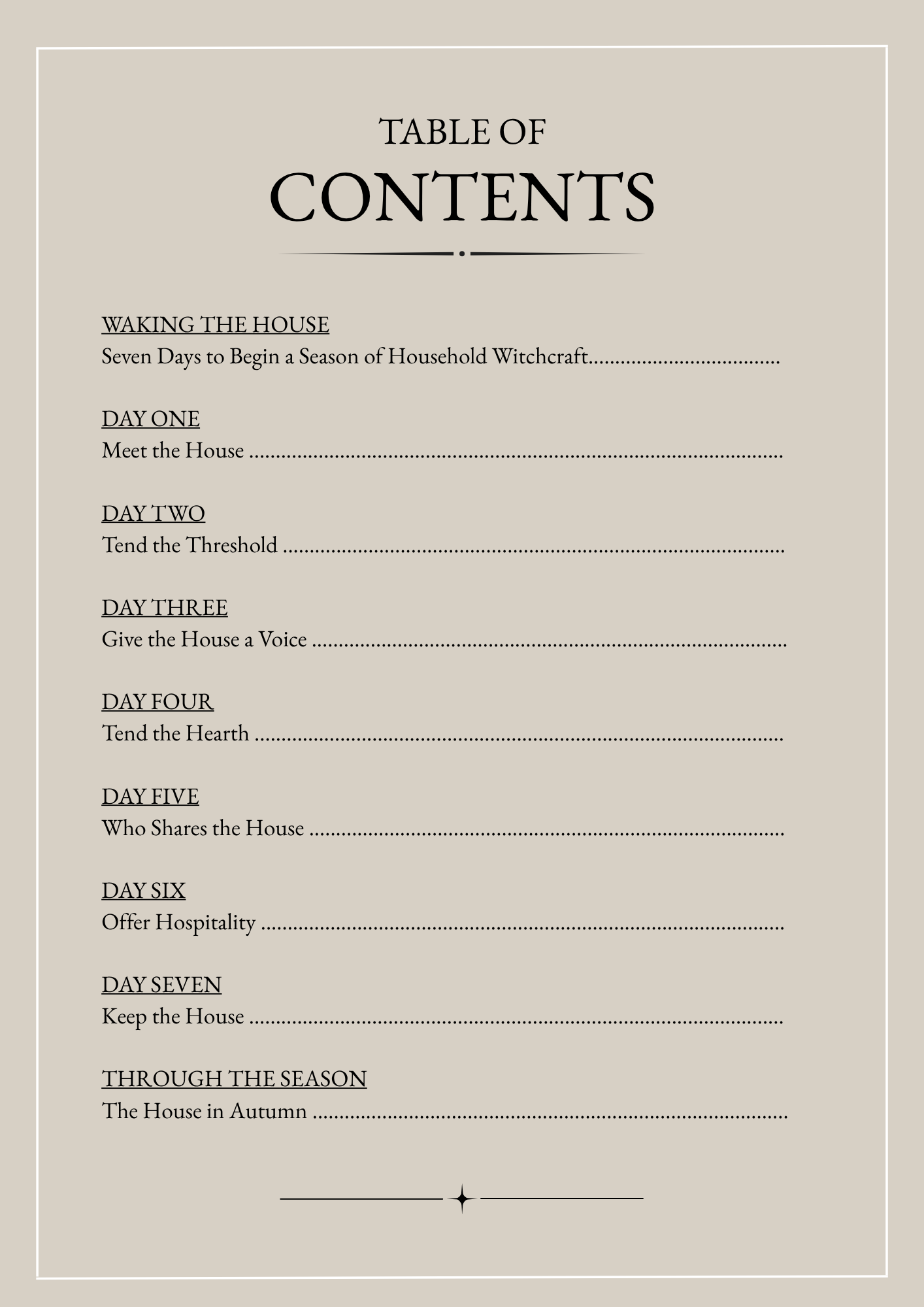 Image 2 of 3
 Image 3 of 3
There is a difference between practicing witchcraft in your house and practicing witchcraft with your house.
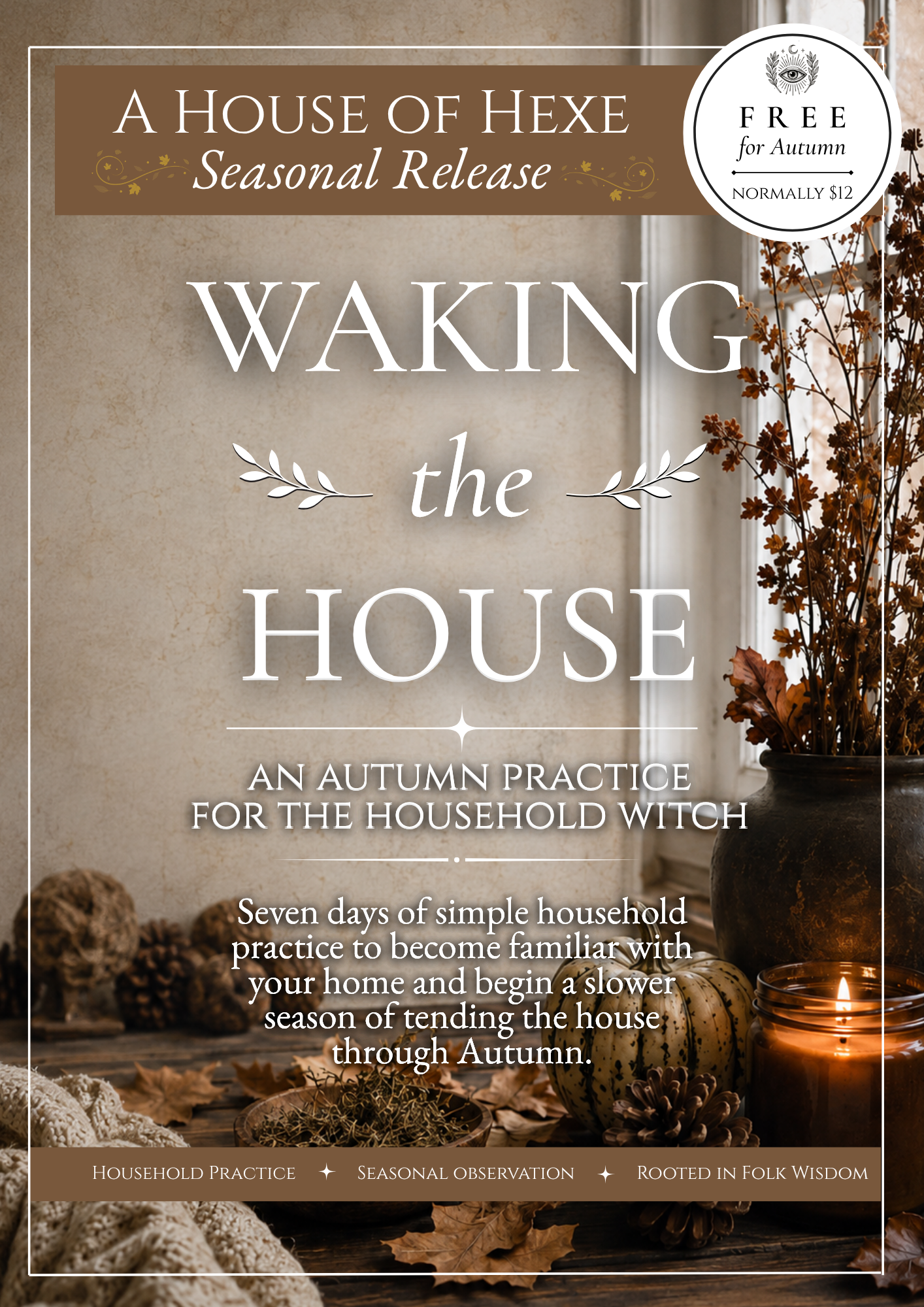
Waking the House is an autumn practice for building a more deliberate relationship with the place where your everyday life actually happens.
Over seven days, you will move through the house itself: observing its patterns, tending its thresholds, giving attention to the hearth, considering who and what shares the space, offering hospitality, and beginning the work of keeping the house through the season.
This is not about transforming your home into an altar, performing elaborate ritual every day, or pretending that ordinary household life is more mystical than it is. It is about learning to recognize the home as part of the practice rather than merely the room where the practice happens.
The first week is not a race through seven rituals. Each day turns your attention toward one part of the relationship between household, witch, and practice.
Begin by observing the home as it actually exists: its layout, movement, light, sounds, gathering places, neglected corners, and natural center.
Turn toward the doors, entrances, and boundaries of the home, and consider how the threshold is crossed, protected, welcomed, and maintained.
Begin establishing deliberate ways to communicate with the home: through observation, spoken intention, attention, sound, and repeated household practice.
Find the place where the household gathers its warmth, nourishment, activity, and care — whether or not your home contains a literal hearth.
Separate the house itself from the land, ancestors, the dead, spirits, household beings, and other presences that may occupy very different relationships with the home.
Consider what it means to offer care deliberately: what is welcomed, what is given, what is maintained, and where hospitality ends.
Bring the week's work together and begin the longer practice: maintaining the relationship through ordinary care, seasonal attention, and repeated household tending.
Seven days opens the relationship. The rest of the season is where it becomes part of the household.
The opening week gives you a way to begin. What follows is slower: returning to the places you have already noticed and allowing the practice to develop alongside ordinary household life.
Autumn is not treated as one universal calendar experience. The house responds to its own climate, weather, routines, food, light, warmth, and the people living inside it.
The work becomes less about adding something new every day and more about learning how your house moves through the season.
Notice where daylight falls differently, which rooms cool first, when windows begin opening or closing, and where warmth gathers.
Entrances change with the weather: what collects near the door, what needs repair, and what protection or maintenance becomes useful.
Seasonal foods return, cooking changes, harvest and preservation move through the kitchen, and feeding the household takes on a different rhythm.
Heating, weatherproofing, blankets, outdoor spaces, stored goods, cleaning, and repair all belong to seasonal household care.
Seasonal preparation can be extremely unromantic. Checking the heater, repairing weather stripping, washing blankets, and finding the damn humidifier still count as tending the house.
The lessons are meant to move off the page and into the rooms, routines, thresholds, and ordinary work of your own household.
Walk the home deliberately and notice its natural center, boundaries, neglected spaces, movement, light, temperature, sounds, and places that already matter.
Work directly with an entrance as both a physical boundary and a magical one, beginning with the actual condition of the doorway before adding anything symbolic.
Move room by room using a bell, knock, clap, music, or your own voice and learn how sound behaves throughout the house.
Identify where warmth, nourishment, activity, care, and household gathering actually live — whether or not there is a literal fireplace.
Consider the difference between house, land, ancestors, the dead, spirits, household beings, and the people sharing the physical home.
Choose something small and appropriate, decide what relationship the offering belongs to, place it deliberately, and return afterward to the ordinary work of cleaning it up.
Return to the places you identified at the beginning, notice what you understand differently now, and change your first interpretation if the house has shown you something more accurate.
Keep one or two practices that genuinely fit the household instead of forcing yourself into a permanent ritual schedule simply because the first week is complete.
Your home does not need to be quiet, beautiful, old, owned, rural, spotless, or permanently ritualized. The practice begins with the household you are actually living in.
The practice begins with the home you actually have, not the one a photograph, tradition, or fantasy says you should have.
Your house may be beautiful, unfinished, cluttered, temporary, crowded, quiet, or losing a battle with the laundry.
The work does not require a specific faith, pantheon, devotional structure, or religious framework.
A rented apartment, shared house, temporary home, old farmhouse, or suburban kitchen can all be tended.
Observation, cleaning, sound, food, water, ordinary household objects, and attention are enough to begin.
You may speak to the house, understand it spiritually, or simply develop a more deliberate relationship with the place itself.
Repair, cleaning, warmth, food, weatherproofing, maintenance, and practical care belong to the work too.
Waking the House is one doorway. The wider House holds the reference work, seasonal study, and longer lessons that continue around it.
Patrons receive the deeper monthly studies that grow alongside the public House Library, with extended lessons, practical work, and seasonal material for continuing the craft.
Enter the Patron Library →Browse the growing collection of seasonal releases, House Press books, field guides, courses, and longer-form study.
Return to the Library →Read the free editorial library of herbal practice, household skills, witchcraft, folklore, seasonal work, and researched essays.
Browse From the Stacks →The doors remain open. Wander well.