Damiana | Turnera diffusa
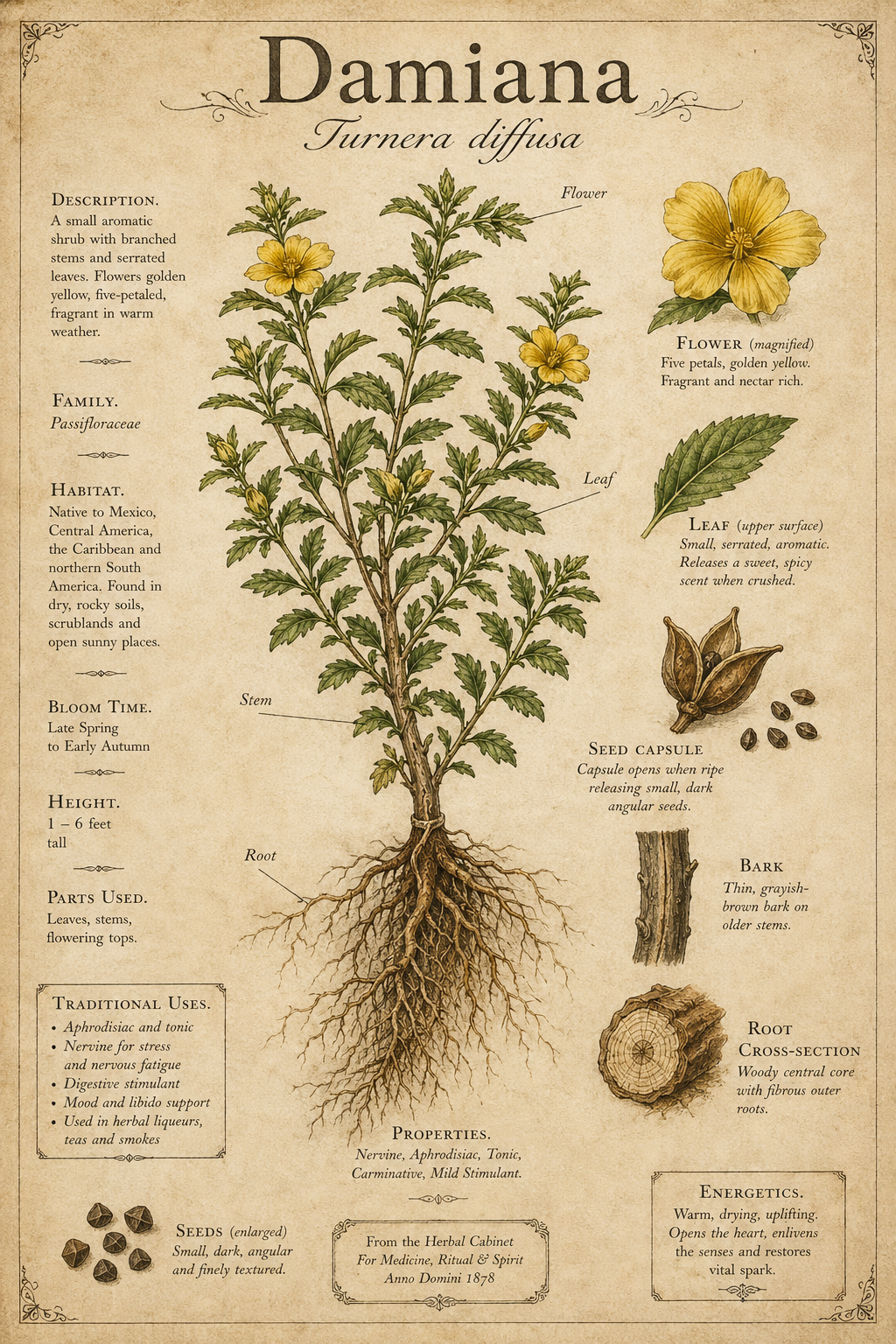
Wild aphrodisiac, solar nervine, keeper of pleasure and courage.Damiana is a small aromatic shrub native to the dry, sun-soaked regions of Mexico, Guatemala, the United States, and parts of the Caribbean. For centuries it has been used as both a sensual tonic and a restorative plant for the nervous system, valued by Indigenous peoples, folk herbalists, and traditional medicine systems alike. Today, Damiana remains one of herbalism’s most beloved allies for mood, libido, tension, and emotional exhaustion. In magical practice, she is a plant of pleasure, attraction, confidence, embodiment, and remembering that the body itself is sacred.
Quick Correspondence Block
Planet: Venus + Sun
Element: Fire + Air
Zodiac: Leo, Libra
Primary Actions: Nervine, aphrodisiac, mood tonic, mild digestive stimulant
Parts Used: Leaf, stem, flowering tops
Preparation Style: Tea, tincture, smoke blend, cordial, glycerite
Magical Uses: Love, attraction, sensual confidence, courage, pleasure magic
Spirit of the Herb: Warmth returning to the body
Overview
Damiana is not a passive herb. She has heat, movement, and personality. Growing wild in arid landscapes, she thrives where many softer plants would wither—rooted in poor soils, relentless sun, and dry winds. That ecology tells you much about her medicine.
Herbalists often reach for Damiana when someone feels emotionally disconnected from pleasure, physically depleted by chronic stress, or mentally stuck in over-analysis. She speaks to the parts of us that have forgotten how to soften without collapsing.
Culturally, Damiana has long carried associations with romance, fertility, sensuality, and emotional vitality. Yet beneath the seductive reputation is a genuinely useful nervous system herb with broad applications.
Botanical Identification
Damiana belongs to the Passifloraceae family (though historically placed elsewhere depending on taxonomy).
Growth Habit
A woody perennial shrub with branching stems and aromatic foliage.
Height / Spread
1–6 feet tall depending on climate
Often forms dense rounded shrubs
Leaves
Small, serrated, oval to lance-shaped
Light to medium green
Slightly resinous surface
Flowers
Small, five-petaled, golden-yellow blossoms
Often fragrant in warm weather
Scent
When crushed, the leaves release a warm, sweet, slightly spicy aroma—somewhere between hay, citrus peel, and sun-dried herbs.
Habitat
Native to:
Northern South America
Central America
Mexico
Dry Southwestern North America
Usually found in rocky soils, desert edges, scrubland, and disturbed sunny ground.
Bloom Season
Late spring through early autumn depending on region.
Lookalikes
Damiana is not commonly confused with dangerous species in cultivated herbal settings, though inexperienced foragers may mistake unrelated small shrubs for it in arid environments. Always confirm flower structure and scent.
Traditional Uses
Damiana’s recorded use stretches through Indigenous and folk traditions across Mesoamerica.
Traditional uses included:
Sexual vitality and fertility support
Emotional uplift during grief or melancholy
Digestive discomfort after heavy meals
Mild urinary support
Recovery after prolonged stress or illness
In Mexican folk medicine, Damiana was often infused into bitters, teas, or alcohol preparations to restore energy, awaken appetite, and rekindle intimacy.
It was also incorporated into ceremonial smoking blends and social tonics where pleasure, connection, and vitality were central themes.
Modern Herbal Actions
Modern herbalists often classify Damiana as a nervine trophorestorative with aphrodisiac tendencies.
Nervine
A nervine supports the nervous system. Damiana is particularly useful when tension, burnout, or emotional rigidity begin to affect libido, digestion, or mood.
Aphrodisiac
This does not simply mean sexual stimulation. True herbal aphrodisiacs often improve circulation, reduce performance anxiety, support mood, and help the body feel safe enough to experience pleasure.
Carminative
Damiana gently stimulates digestive movement, helping reduce gas, stagnation, and nervous digestive discomfort.
Mild Mood Tonic
Many herbalists use Damiana when stress manifests as irritability, flatness, mental fatigue, or emotional withdrawal.
Damiana may be especially useful for:
Stress-induced low libido
Nervous exhaustion
Emotional shutdown
Mild digestive stagnation
Cycle-related mood shifts
Preparations
Damiana is versatile, but some methods truly let her shine.
Best Preparations
Tea / Infusion
Excellent for nervous system support and mood. Slightly bitter, aromatic, and warming.
Tincture
Perhaps the most efficient preparation for libido, mood, and stress support.
Glycerite
A good alcohol-free option, especially for sensitive individuals.
Cordial / Herbal Liqueur
A traditional method that honors both her digestive and sensual nature.
Smoke Blend
Traditionally blended with other herbs for ritual or ceremonial use.
Less Common but Possible
Bath infusion
Ritual wash
Herbal honey infusion
Love spell sachets
Damiana is not usually used in salves or topical oils, as her strongest medicine is internal, aromatic, and energetic.
Magical Uses
Damiana is not a “love herb” in the shallow sense. She is a body reclamation herb.
In folk magic, Damiana may be used for:
Reawakening sensual confidence after heartbreak
Attraction work rooted in authentic magnetism
Strengthening intimacy between committed partners
Dissolving shame around pleasure
Courage before difficult conversations involving desire
Reclaiming embodiment after emotional numbness
She blends beautifully with herbs like:
Rose, Cacao, Cinnamon, and Mugwort depending on the working.
Spiritually, Damiana asks a blunt question:
Are you chasing intensity...or actually allowing yourself to feel?
Astrological Correspondences
Damiana carries strong Venusian medicine through pleasure, attraction, intimacy, and softness. Venus governs relationship, sensuality, beauty, and the ability to receive.
She also carries clear Solar force through warmth, vitality, courage, circulation, and confidence. This combination makes her especially potent—she does not just attract; she radiates.
Elementally, Damiana is Fire with Air.
The Fire is:
Libido
Passion
Warm circulation
Confidence
The Air is:
Playfulness
Social ease
Mental uplift
Emotional movement
Zodiac Ties
Leo - courage, visibility, pleasure, creative expression
Libra - relationship, sensuality, beauty, reciprocity
Timing
Best worked with:
Waxing Moon for attraction and magnetism
Fridays for Venus work
Sundays for confidence and vitality work
Growing & Harvesting
Damiana prefers conditions similar to her native habitat.
Soil
Sandy, rocky, fast-draining
Slightly alkaline soils tolerated
Sun
Full sun preferred
Water
Moderate to low once established
Avoid overly wet roots
Climate
Best in warm climates. Sensitive to hard frost.
Harvest
Harvest:
Leaves and flowering tops
Best just before or during bloom
Drying
Hang in small bundles
Keep out of direct sunlight
Storage
Airtight glass jars
Cool, dark cupboard
Best potency within 1 year
Warnings & Contraindications
Damiana is generally well tolerated, but caution is still warranted.
Avoid or use professional guidance if:
Pregnant or breastfeeding
Managing blood sugar disorders
Taking medications affecting glucose regulation
Using stimulating herbs in excess
Sensitive to aromatic plants
High doses may occasionally cause:
Digestive irritation
Restlessness
Headache in sensitive individuals
As always: more herb is not always better medicine.
Final Thoughts
Damiana teaches something modern people often forget: pleasure is not weakness, and softness is not surrender.
She belongs to those rebuilding intimacy with their own body…after stress, after heartbreak, after years of living from the neck up.
In medicine and in magic, Damiana does not seduce.
She awakens.
Sources / Further ReadinG
Medical Herbalism - David Hoffmann
Herbal Medicine From the Heart of the Earth - Sharol Tilgner
The Modern Herbal Dispensatory
American Botanical Council
Regional ethnobotanical records from Mexico and Central America