Calendula | Calendula officinalis
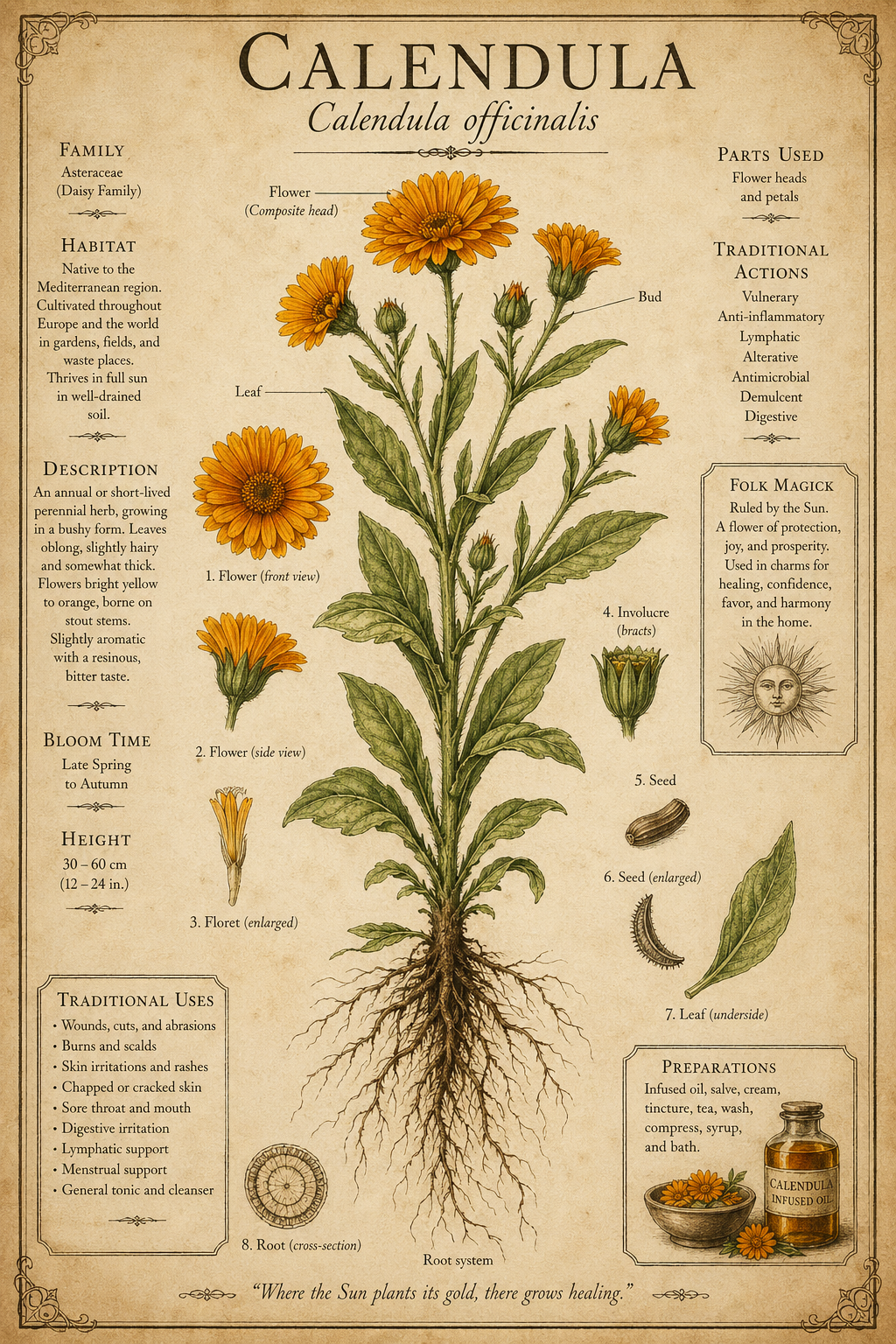
Golden wound-flower, hearth healer, bright medicine of repair.Calendula is one of the great domestic herbs of the traditional apothecary: cheerful in the garden, dependable in the medicine chest, and far more potent than its beauty suggests. Long valued for skin repair, soothing inflammation, lymphatic stagnation, digestive irritation, and the slow restoration of damaged tissues, Calendula has earned centuries of loyalty from herbalists, midwives, gardeners, and household healers. In modern herbalism, it remains one of the most trusted remedies for external healing and gentle constitutional support. Magically, Calendula carries the signature of sunlight made practical: blessing the home, restoring warmth after hardship, drawing favor, and helping life bloom again after difficult seasons.
Quick Correspondence Block
Planet: Sun
Element: Fire
Zodiac: Leo, Virgo
Primary Actions: Vulnerary, lymphatic, anti-inflammatory, alterative, soothing tonic
Parts Used: Flower heads, petals
Preparation Style: Infused oil, salve, cream, tea, tincture, wash, bath
Magical Uses: Protection, joy, blessing, confidence, favor, hearth peace
Spirit of the Herb: The warm-handed healer who says, “Light still belongs here.”
Overview
Calendula is one of those rare herbs that nearly every herbalist eventually reveres. It is easy to grow, beautiful to harvest, safe in many contexts, and astonishingly useful. Though commonly viewed as a simple ornamental flower, Calendula is in truth a serious medicine for damaged skin, irritated tissues, sluggish lymph, and states of internal heat paired with stagnation.
Its temperament is solar but not aggressive. Calendula does not blaze like cayenne or command like rosemary. Instead, it restores through warmth, steady movement, and gentle resilience. It is the medicine of wounds that need patience, skin that needs rebuilding, and spirits that need brightness without force.
Historically, Calendula was grown in monastery gardens, cottage plots, and kitchen gardens throughout Europe. It served both practical and symbolic roles: medicine, dye plant, food garnish, threshold blessing, and flower of household luck.
If there is a single herb that teaches the meeting point between beauty and usefulness, it may be Calendula.
Botanical Identification
Calendula officinalis is a member of the Asteraceae.
Growth Habit
Usually grown as an annual, though it often self-seeds generously in favorable climates. Plants form branching mounds with repeated blooming through the season.
Height / Spread
Typically 12–24 inches tall, sometimes wider than tall when well-grown.
Leaves
Leaves are soft green, oblong to lance-shaped, slightly fleshy, and often mildly sticky or resinous.
Flowers
Composite flower heads in shades of yellow, gold, apricot, or deep orange. Some cultivars are single-petaled while others are dense and double.
Medicinal growers often prefer strongly colored, resinous blooms with rich scent.
Scent
Green, slightly bitter, resinous, warm.
Habitat
Thrives in gardens, herb beds, vegetable borders, pots, and disturbed sunny soils.
Bloom Season
Spring through frost with regular harvesting or deadheading.
Lookalikes / Confusion Species
Calendula is often confused with ornamental marigolds in the Tagetes genus. Though beautiful, they are distinct plants and should not automatically be substituted medicinally.
Positive identification matters.
Traditional Uses
Calendula has a long history in European folk medicine and domestic healing traditions.
External Uses
Traditionally used for:
Cuts and scrapes
Chapped skin
Rough hands from labor
Minor burns
Rashes
Cracked heels
Windburn and weathered skin
Calendula became a common household remedy because it was both effective and available.
Internal Uses
Historically used in teas or tinctures for:
Digestive irritation
“Thick” or stagnant states
Spring cleansing formulas
Swollen glands
Menstrual stagnation in some traditions
General constitutional support after illness
Culinary & Domestic Uses
Calendula petals were added to soups, broths, cheeses, rice, and butter, earning it the old title “poor man’s saffron.”
Ritual Uses
Flowers were strewn on thresholds, placed in protection sachets, carried for favorable attention, and used in midsummer rites honoring abundance and sunlight
Modern Herbal Actions
Calendula remains one of the most widely used herbs in contemporary practice.
Vulnerary
A vulnerary supports tissue repair and recovery. Calendula is a premier vulnerary for:
Dry cracked skin
Minor abrasions
Surface irritation
Slow-healing everyday damage
Anti-inflammatory
Calendula helps calm heat, redness, tenderness, and irritation in both skin and mucosal tissues.
Lymphatic
Many herbalists use Calendula internally when there is sluggish drainage, mild glandular stagnation, or puffiness following illness.
Alterative
An alterative gently supports the body over time through improved elimination, tissue tone, and constitutional balance.
Antimicrobial Support
Calendula is often included in topical formulas where keeping tissues clean and resilient matters.
Digestive Support
Mild bitter and soothing qualities make Calendula useful in formulas for irritated digestion, especially when inflammation and sluggishness coexist.
Preparations
Calendula is one of the most versatile apothecary herbs.
Infused Oil
A classic preparation and one of the best oils for skin care.
Use for:
Dry skin
Scar massage
Rough elbows
Weathered hands
Daily repair formulas
Use fully dried flowers to reduce spoilage risk.
Salve / Balm
Excellent for:
Hands
Feet
Minor scrapes
Chapped skin
Seasonal dryness
Often paired with plantain, lavender, comfrey, chamomile, or St. John’s Wort.
Cream / Lotion
Ideal for modern skincare formulas where moisture and herbal repair are both desired.
Tea / Infusion
Useful internally for:
Lymphatic movement
Digestive support
Gentle constitutional cleansing
Mild inflammatory states
Tincture
Often used in formulas with burdock, cleavers, violet, or echinacea depending on the goal.
Wash / Compress
A strong cooled tea may be used externally as a wash or compress.
Bath
A rich infusion added to bathwater is restorative after sun, grief, stress, illness, or long labor.
Magical Uses
Calendula is solar folk magic. It works through warmth, vitality, visibility, favor, and blessing.
Home Blessing
Place flowers near the doorway or hearth to keep the home warm in spirit and protected in tone.
Joy After Hardship
Use in baths, floor washes, or charm work after periods of grief, depression, burnout, or conflict.
Calendula does not erase sorrow—it invites life back in.
Favor & Opportunity
Historically associated with drawing fair treatment from judges, employers, officials, and gatekeepers.
Useful in petitions, interview charms, and confidence oils.
Confidence & Beauty
Dress the body with Calendula-infused oil before dates, speaking engagements, or important meetings.
Peace in the Household
Blend with rosemary, lavender, and basil for harmony workings where tension has settled into the walls.
Honest Love
Calendula favors affection rooted in warmth and sincerity rather than obsession or manipulation.
Astrological Correspondences
Planetary Rulership: Sun
Its bright blooms, golden color, restorative warmth, and connection to vitality clearly place Calendula under solar influence.
Elemental Nature
Fire, but hearth fire rather than wildfire. Warmth that nourishes, protects, and sustains.
Zodiac Ties
Leo for radiance, confidence, visibility, heart energy.
Virgo for practical healing, domestic skill, useful beauty.
Seasonal Timing
Best sown in spring and harvested throughout the bright season. Excellent for Summer Solstice rites and Sunday workings.
Lunar / Solar Relevance
Especially suited to solar hours, waxing moon beauty work, and rites of restoration.
Growing & Harvesting
Calendula is rewarding for beginners and prolific for experienced growers.
Soil
Average to moderately rich, well-drained soil.
Sun
Full sun preferred. In harsh climates, some afternoon protection can help.
Water
Moderate consistent moisture. Avoid soggy roots.
Climate Notes
Often thrives best in cooler shoulder seasons and may slow in extreme summer heat.
Harvest Timing
Pick flowers when fully open after dew has dried.
Frequent harvesting encourages more blooms.
Best Parts to Gather
Whole flower heads
Petals
Occasionally flowering tops (some of the green underneath)
Drying Notes
Dry quickly in thin layers with strong airflow. Preserve color by avoiding harsh direct sun during drying.
Storage Notes
Store airtight away from heat, moisture, and light.
Well-dried Calendula should remain bright and fragrant.
Warnings & Contraindications
Calendula is generally gentle, though caution is always wise.
Those sensitive to the Asteraceae may react
Patch test topical formulas on reactive skin
Use caution internally during pregnancy unless professionally guided
Poorly dried flowers may spoil oils
Do not rely on home remedies alone for serious wounds or infection
Final Thoughts
Calendula is sunlight made useful. It asks little, gives generously, and belongs as much in the medicine chest as in the flower bed. It teaches that healing need not always be dramatic. Sometimes restoration comes as steady warmth, repeated often, until life blooms again.
In the old occult botanical library, Calendula belongs in the drawer marked Repair, Blessing, and Return of Light.
Sources / Further ReadinG
Hoffmann, David. Medical Herbalism.
Grieve, Maud. A Modern Herbal.
Tilgner, Sharol. Herbal Medicine From the Heart of the Earth.
Easley, Thomas & Horne, Steven. The Modern Herbal Dispensatory.
Traditional European materia medica texts and contemporary clinical herbal practic.