
Midsummer Infusions
Midsummer arrives with abundance in its hands.
The gardens are no longer tentative. The herbs that emerged cautiously in spring now stand tall and confident beneath the sun. Calendula stretches toward the light. Lemon Balm threatens to overtake its bed. Roses offer their blossoms in generous succession. Even the weeds seem determined to remind us that life is eager to grow.
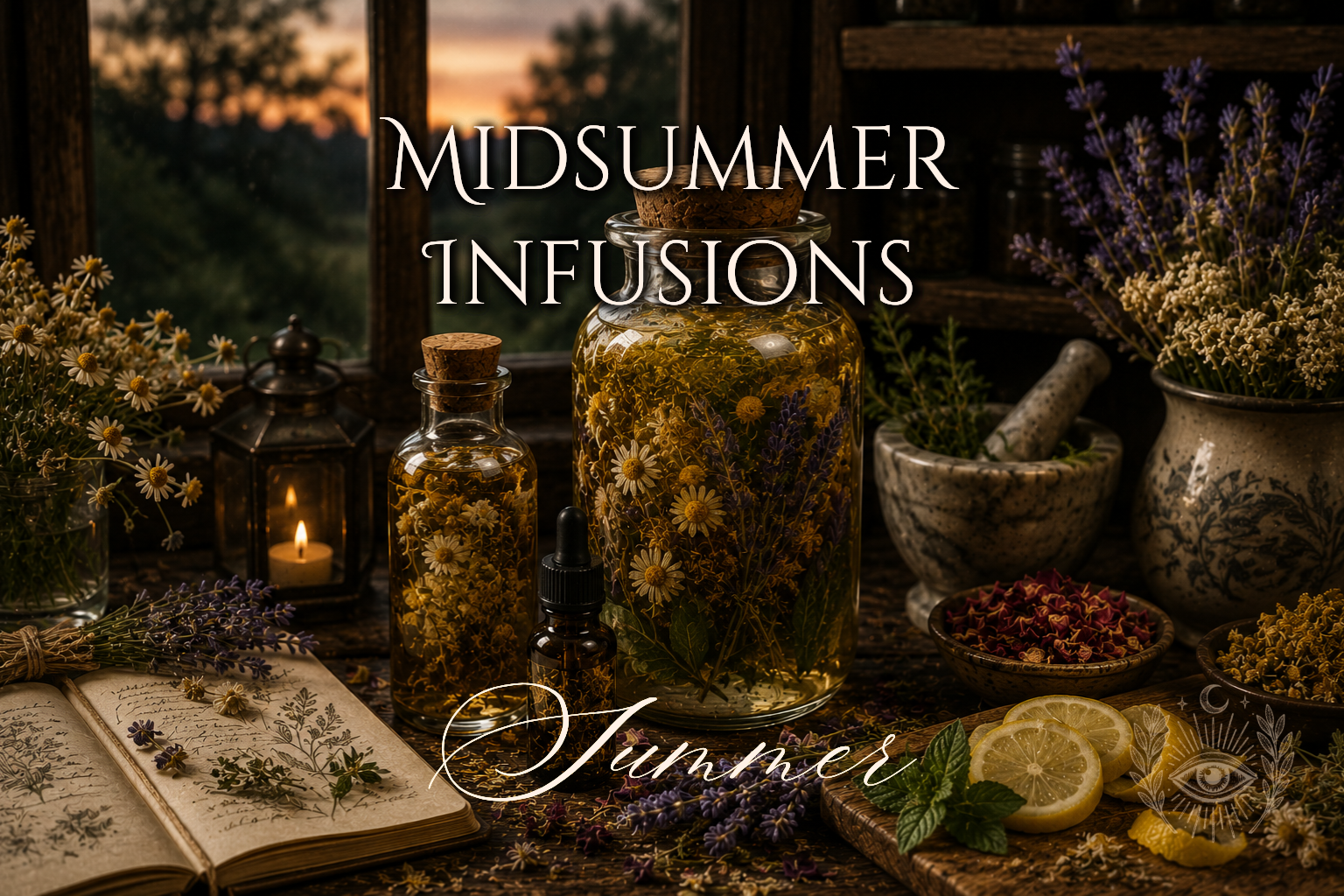
For traditional herbalists, this season has long been associated with gathering. While spring often focuses on fresh greens and tender shoots, midsummer invites the harvest of leaves, flowers, and aromatic herbs at the height of their vitality. The days are long, the plants are vigorous, and the apothecary begins quietly preparing for seasons yet to come.
Infusions occupy an important place in this work. Unlike tinctures, vinegars, or oils, infusions require little preparation beyond water, herbs, and patience. They allow us to engage directly with the plants while creating simple preparations that can support hydration, nourishment, and seasonal well-being.
The following midsummer infusions celebrate the abundance of July while highlighting herbs that thrive during the season.
Lemon Balm Summer Infusion
For brightness, refreshment, and gentle nervous system support.
Ingredients
1 ounce dried Lemon Balm
1 quart hot water
Pour hot water over the herb and allow it to steep for four to eight hours before straining.
Lemon Balm possesses a remarkable ability to feel simultaneously calming and uplifting. It is one of the great herbs of summer, offering support during periods of overstimulation while retaining a cheerful character that reflects the season itself.
Served chilled, this infusion becomes a refreshing companion during hot afternoons.
The Garden Nourishment Infusion
For replenishment during periods of heavy work and activity.
Ingredients
½ ounce Oatstraw
½ ounce Nettle
¼ ounce Red Clover
1 quart hot water
Steep for at least four hours before straining.
This blend focuses less on flavor and more on nourishment. Long infusions have traditionally been used to extract minerals and supportive plant constituents from nutrient-rich herbs. Gardeners, farmers, herbalists, and anyone spending long days outdoors often appreciate these deeply nourishing preparations.
Think of this as food-like nourishment in the form of tea.
Rose & Hibiscus Cooling Infusion
For warm afternoons and summer gatherings.
Ingredients
Rose Petals
Hibiscus
Lemon Balm
Steep until fragrant and strain.
The resulting infusion is bright, tart, floral, and beautifully suited to summer. Served over ice, it becomes a seasonal beverage that feels equally appropriate at a family gathering, garden picnic, or quiet evening on the porch.
Not every herbal preparation must taste medicinal to be valuable.
Blue Vervain Reflection Infusion
For slowing down and releasing mental tension.
Ingredients
Blue Vervain
Lemon Balm
Linden Flower
Blue Vervain is best approached with respect for its bitterness. While not everyone's favorite flavor, its traditional role among overworked, overstimulated individuals has earned it a lasting place within the herbal repertoire.
Combined with Lemon Balm and Linden, the resulting infusion becomes gentler while maintaining its contemplative nature.
This is a tea for slowing down rather than speeding up.
The Sunset Garden Infusion
For evenings spent watching the day come to a close.
Ingredients
Chamomile
Lemon Balm
Rose Petals
Lavender
Prepared warm or chilled, this infusion reflects the softer side of midsummer. The brightness of the day has passed. The garden settles into evening. Birds quiet. Shadows lengthen.
The herbs mirror this transition, encouraging the body to follow the rhythm already unfolding in the landscape.
Mugwort & Rose Dream Infusion
For dream journaling, symbolic work, and nights devoted to reflection.
Ingredients
Mugwort
Rose Petals
Lemon Balm
Mugwort has accompanied dreamers, travelers, and seekers of insight for centuries. Used thoughtfully, it creates an infusion that feels particularly suited to evenings of journaling, divination, meditation, or simple observation.
This is less an infusion of sleep and more an infusion of listening.
Midsummer infusions remind us that herbalism is not solely about addressing problems. Much of traditional plant work revolved around maintaining relationship…gathering herbs at the proper season, preserving abundance, nourishing the body, and paying attention to the rhythms unfolding around us.
The plants of July offer an invitation to participate in that relationship.
The kettle is filled. The herbs are gathered. The water is poured. For a few moments, the pace slows enough to notice what the season is trying to teach.
At the height of summer, perhaps that lesson is abundance itself…not abundance measured by accumulation, but abundance measured by presence. The herbs are here. The season is here. The work is simply to notice it while it lasts.