
Herbal Baths for Restoration & Recovery
The bath has occupied a place in healing traditions for far longer than most modern wellness trends. Across cultures and throughout history, water has served as medicine, ritual, recovery, and refuge. Herbal baths were prepared after illness, childbirth, grief, long journeys, seasonal labor, and periods of profound emotional strain. They were used to soothe aching muscles, cleanse the skin, encourage relaxation, and create a pause between one experience and the next.
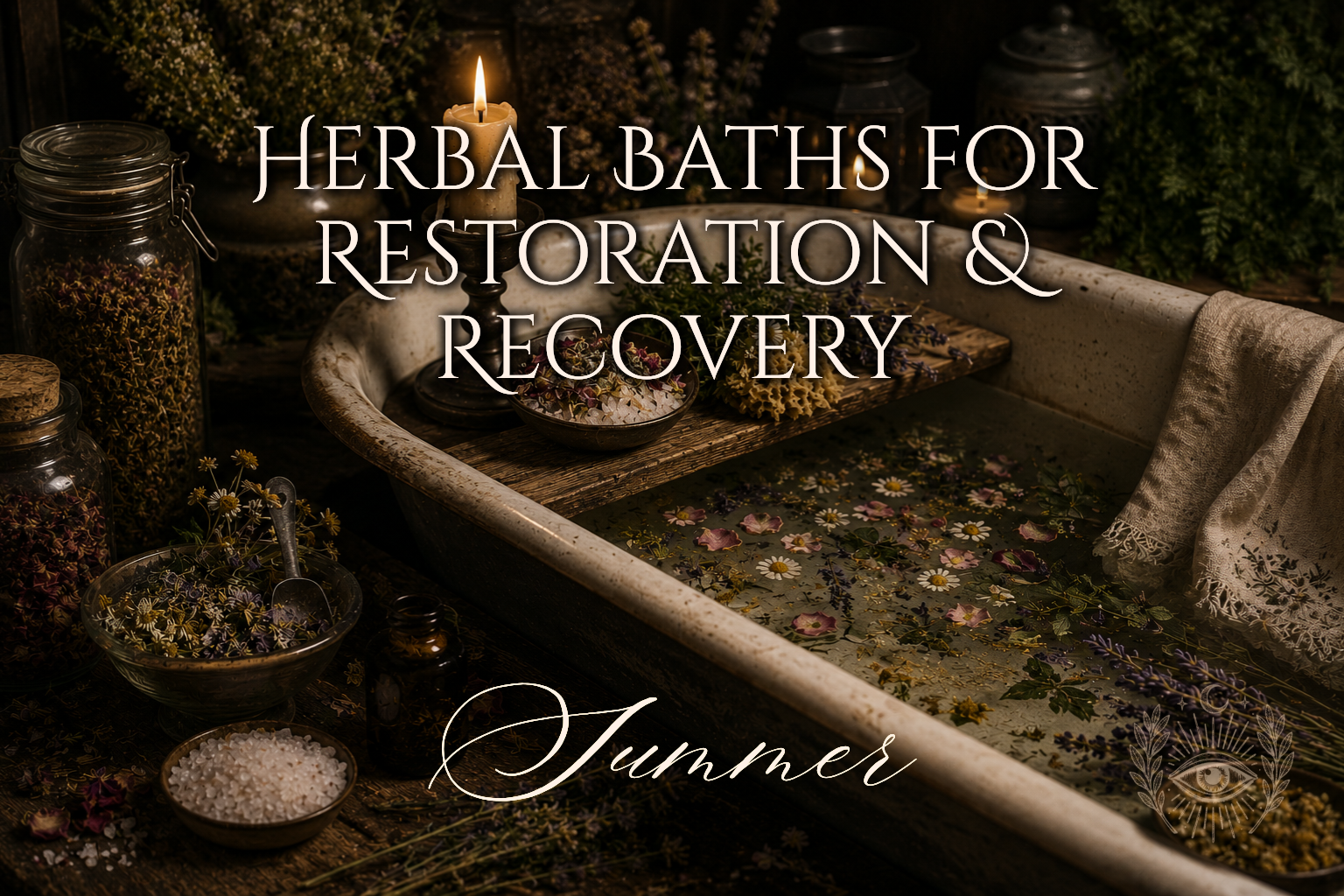
There is something uniquely restorative about immersing the body in warm water infused with plants. Unlike a tea or tincture, a bath asks nothing of the digestive system. It does not require concentration or effort. For a brief time, the body is invited simply to rest. The muscles soften, your breath deepens, your nervous system receives permission to step away from its constant vigilance.
July often arrives with its own forms of exhaustion. Gardens demand daily attention. Heat accumulates. Travel increases. Celebrations fill calendars. Long days spent outdoors leave their mark upon both body and mind. The following herbal baths draw upon July's plant allies while offering different approaches to restoration and recovery.
For ease of cleanup, place herbs in a muslin bag, cotton cloth, or large tea sachet before adding them to the bathwater.
The Summer Evening Bath
For unwinding after busy days and easing into a slower pace.
Ingredients
Lemon Balm
Chamomile
Oatstraw
Rose Petals
This blend is gentle, nourishing, and approachable. Lemon Balm encourages relaxation while Chamomile softens tension. Oatstraw contributes a soothing quality that many herbalists associate with replenishment after periods of stress or overstimulation. Rose adds both fragrance and a sense of quiet comfort.
This is an ideal bath for evenings when the day has been full but not necessarily difficult.
The Gardener's Recovery Bath
For sore muscles, tired joints, and long hours spent outdoors.
Ingredients
Rosemary
Lavender
Calendula
Epsom Salt
After digging, planting, harvesting, hauling water, or working beneath the summer sun, the body often benefits from intentional recovery.
Rosemary has long been associated with circulation and invigoration, while Lavender and Calendula bring their familiar soothing qualities. Combined with Epsom salts, this blend creates a restorative bath particularly suited to those who spend much of their time working with their hands.
The Overstimulated Nervous System Bath
For mental exhaustion, emotional overload, and difficulty slowing down.
Ingredients
Skullcap
Lemon Balm
Linden Flower
Oatstraw
Not all fatigue originates in the muscles. Sometimes the body feels exhausted because the nervous system has been running at full speed for too long.
This blend focuses on creating an atmosphere of quiet. The fragrance is subtle, the herbs gentle, and the intention simple: to encourage the body to release what it has been carrying.
Many practitioners enjoy pairing this bath with an early bedtime, journaling session, or evening tea.
The Cooling Moon Bath
For hot summer nights and lingering heat.
Ingredients
Lemon Balm
Spearmint
Rose Petals
A handful of sea salt
This bath may be prepared with warm water as usual, though many find the cooling fragrance particularly refreshing during July's hottest evenings.
The combination of mint and Lemon Balm creates an uplifting aroma while Rose lends softness to the experience. It is a reminder that restoration does not always require warmth. Sometimes what the season asks for is relief.
The Threshold Bath
For transitions, endings, beginnings, and periods of personal change.
Ingredients
Mugwort
Rosemary
Rose Petals
Bay Leaf
Throughout folklore and folk practice, baths have often accompanied moments of transition. Before journeys, after significant events, at the turning of seasons. Following periods of illness or hardship.
This blend draws upon herbs traditionally associated with movement, reflection, and crossing thresholds. It is less about physical recovery and more about creating space to acknowledge change.
Sometimes the body is not the only thing that requires restoration.
The Burden Bearer's Bath
For those carrying more responsibility than they should.
Ingredients
Blue Vervain
Lemon Balm
Rose Petals
Lavender
Blue Vervain has long been associated with individuals who attempt to hold everything together through determination alone. This bath is for the caretakers, organizers, planners, problem-solvers, and chronic overachievers who struggle to put their burdens down.
The herbs cannot solve the problems waiting outside the bathroom door. They can, however, provide an opportunity to set those burdens aside for an hour.
Sometimes recovery begins with allowing ourselves to rest before we believe we have “earned it”. (Note: You do not need to earn rest, it is a birthright)
Herbal baths remind us that restoration is not a luxury reserved for moments of collapse. Traditional practitioners understood that recovery worked best when practiced regularly rather than postponed indefinitely. A bath prepared before exhaustion becomes overwhelming often serves us better than one prepared after we have completely depleted ourselves.
The plants teach the same lesson repeatedly throughout the growing season. Growth requires rest. Productivity requires recovery. Even the most abundant garden follows cycles of activity and restoration.
The body is no different.
In a culture that often celebrates constant movement, an herbal bath becomes a quiet act of remembering. It reminds us that healing is not always found in doing more. Sometimes it is found in warm water, fragrant herbs, and the simple willingness to be still for a little while.