
Cooling Herbal Vinegars for Summer
Before refrigeration, sports drinks, or electrolyte powders, people found ways to work with the heat rather than fight against it. Across Europe, the Mediterranean, the Middle East, and parts of North America, herbal vinegars and drinking vinegars appeared as both food and medicine. Farmers carried them into the fields. Travelers diluted them with water during long journeys. Household herbalists infused local plants into vinegar to preserve seasonal abundance and create preparations that could be used long after the harvest had passed.
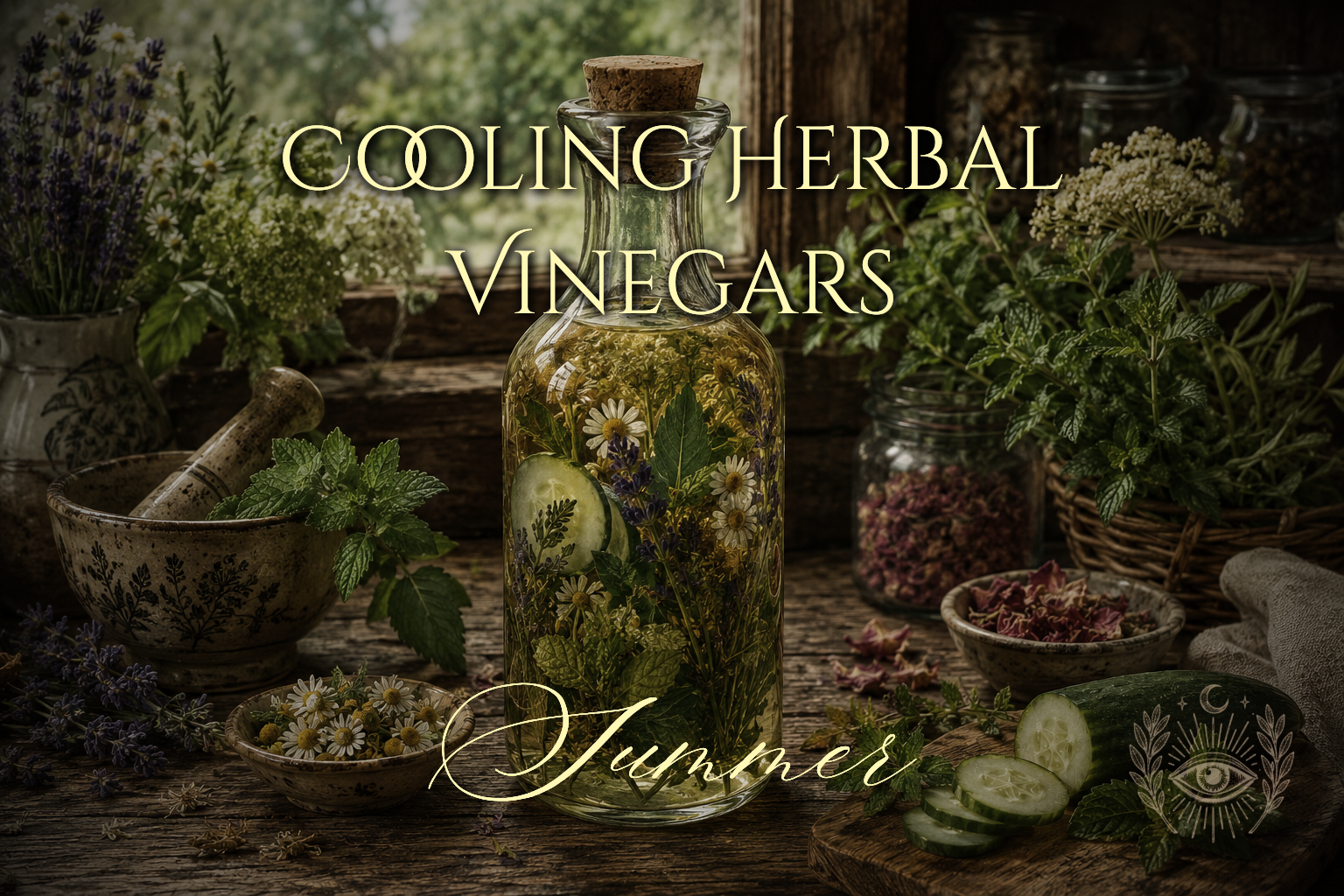
Herbal vinegars occupy a fascinating space between the kitchen and the apothecary. They extract minerals that water often misses, preserve delicate plants that may lose their vitality when dried, and offer a bright acidity that can stimulate digestion during the sluggish heat of summer. When diluted into cool water, added to sparkling water, or incorporated into meals, they become a practical way to work with seasonal plants while supporting the body through the warmest months of the year.
July's herbs lend themselves particularly well to vinegar preparations. Lemon Balm brings brightness. Blue Vervain offers its traditional bitterness. Even Mugwort, used thoughtfully, contributes depth and complexity. The following preparations explore different ways these plants have traditionally found their place in the summer apothecary.
Garden Mineral Vinegar
For supporting nourishment during the height of the growing season.
Ingredients
Nettle
Oatstraw
Red Clover
Apple Cider Vinegar
Pack fresh herbs into a jar and cover completely with vinegar. Infuse for four to six weeks before straining.
This preparation is less about flavor and more about nourishment. Mineral-rich herbs have long been preserved in vinegar to create concentrated additions for dressings, soups, cooked greens, and daily tonic use. A splash added to meals brings both flavor and the subtle support of the plants themselves.
Blue Vervain Digestive Bitter
For heavy meals, sluggish digestion, and summer indulgences.
Ingredients
Blue Vervain
Orange Peel
Lemon Peel
Apple Cider Vinegar
Blue Vervain's bitterness shines in vinegar preparations. Combined with citrus peel, the result becomes a traditional-style digestive bitter that can be taken in small amounts before meals or diluted into sparkling water.
Bitterness has largely disappeared from modern diets, yet traditional herbal systems have long recognized its role in preparing the digestive system for food. This preparation serves as a reminder that not every useful flavor is sweet.
Cucumber, Mint & Lemon Balm Shrub
For heat-heavy afternoons.
Ingredients
Lemon Balm
Spearmint
Sliced Cucumber
Apple Cider Vinegar
Honey to taste
Allow the herbs and cucumber to infuse in vinegar for several weeks before straining and sweetening lightly with honey.
Diluted into cold water, this preparation creates one of the most refreshing summer drinks imaginable. The cooling nature of mint and cucumber combines beautifully with the uplifting character of Lemon Balm, creating a beverage that feels like shade on a hot day.
Mugwort Traveler's Vinegar
For journeys, transitions, and threshold work.
Ingredients
Mugwort
Rosemary
Lemon Peel
Apple Cider Vinegar
Mugwort has long been associated with roads, crossroads, travelers, and liminal spaces. This preparation draws from those older associations. While it may certainly be used in culinary ways, many practitioners also enjoy incorporating it into seasonal ritual meals, travel preparations, or threshold-focused workings.
The flavor is earthy, aromatic, and slightly wild…much like the herb itself.
Rose & Hibiscus Summer Vinegar
For beauty, refreshment, and celebration.
Ingredients
Rose Petals
Hibiscus
Lemon Balm
Apple Cider Vinegar
The resulting vinegar is vibrant in both color and flavor. Floral without becoming perfumed, tart without becoming sharp, it works beautifully in sparkling water, fruit salads, dressings, and seasonal desserts.
This is the sort of preparation that reminds us medicine and pleasure have not always been separate categories.
Herbal vinegars ask us to reconsider what medicine can look like. Not every preparation arrives in a dropper bottle. Not every remedy tastes unpleasant. Some forms of seasonal support arrive quietly at the dinner table, stirred into a glass of cold water, drizzled over garden vegetables, or shared among friends gathered beneath a summer sky.
The old household herbalists understood something modern culture often forgets: sometimes the most effective medicine is simply learning how to live well within the season that surrounds you.